
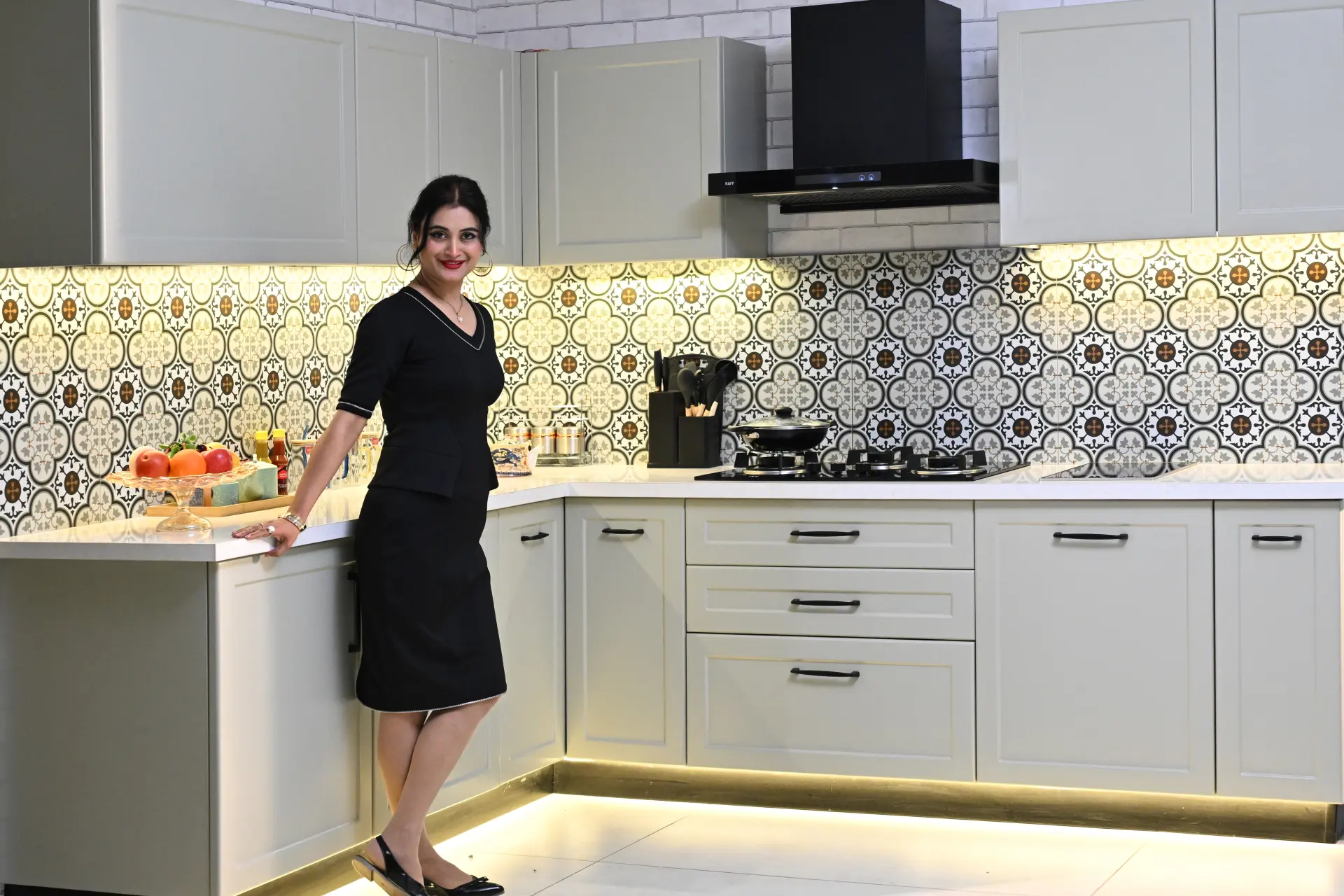
The modular kitchen price is often the first thing a homeowner asks and the hardest thing to answer with one honest number. A small straight kitchen and a large U-shaped kitchen may use the same finish but need very different amounts of cabinet material, hardware and labour. Two kitchens of the same size can also vary sharply once you change the carcass, shutters, drawers, countertop or appliances.
For Lucknow homeowners planning in 2026, the useful approach is to separate the quote into parts. Start with the cabinet material and approximate cabinet area, then add finish, hardware, accessories, countertop, appliances, installation and taxes. Once those pieces are visible, a ₹2 lakh, ₹3 lakh or ₹5 lakh budget becomes much easier to judge.
Table of Contents
Kitchen prices in Lucknow this year
Steelax uses an 80 sq ft kitchen as a simple planning reference when comparing common cabinet systems. That example puts carpenter-made plywood at about ₹1.25 lakh, factory HDHMR or MDF around ₹2.5 lakh, acrylic around ₹3 to ₹3.25 lakh, GI steel around ₹3.2 lakh, 202 steel around ₹4 lakh and 304 stainless steel around ₹5.5 lakh.
These are reference figures, not a quotation for every home. Your final cost changes with the actual cabinet area, layout, finish, internal storage, hardware, countertop, site condition and appliance selection. A kitchen with many drawers and tall units will cost differently from one with simple hinged base cabinets, even if the room dimensions are similar.
It also helps to ask what the quoted area means. Some companies price by running foot, some by cabinet square foot and some by a complete project value. A low-looking rate can become expensive if several essential items sit outside the base price. Compare the final specification, not only the headline rate.
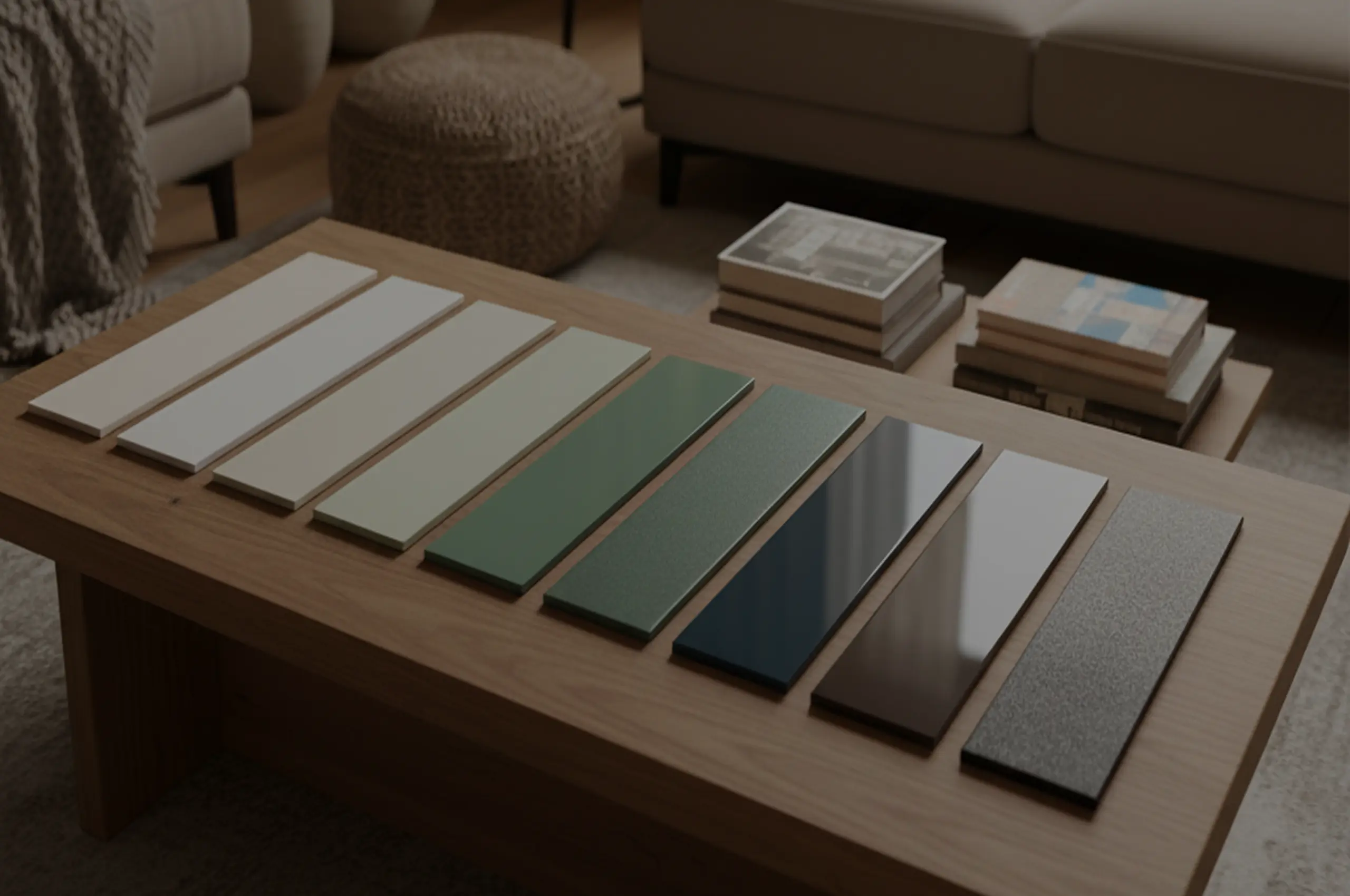
Price per sq ft by material
Using the Steelax 80 sq ft reference only as a planning calculation, the cabinet values work out roughly as follows.
| Cabinet system | 80 sq ft planning reference | Approx. derived rate per sq ft | What to remember |
| Carpenter plywood | ₹1.25 lakh | About ₹1,560 | Site-made work can vary widely by board, laminate and hardware |
| Factory HDHMR or MDF | ₹2.5 lakh | About ₹3,125 | Factory finish and edge quality affect the final quote |
| Acrylic system | ₹3 to ₹3.25 lakh | About ₹3,750 to ₹4,060 | Acrylic is a finish-led choice, so shutter specification matters |
| GI steel | ₹3.2 lakh | About ₹4,000 | Steel structure with a lower entry point than stainless grades |
| 202 steel | ₹4 lakh | About ₹5,000 | Stainless option used selectively by specification |
| 304 stainless steel | ₹5.5 lakh | About ₹6,875 | Higher material cost, especially useful in moisture-prone zonesn |
Do not use these numbers to multiply your wall length and call it a final budget. The calculation is only a way to understand relative material cost. A proper modular kitchen estimate should show the actual cabinet schedule and what sits inside each unit.
Steelax also does not need to build the entire kitchen in one grade. The company uses 304 stainless steel in the sink zone and can specify 202 or GI in other areas according to the project. That zone-by-zone approach can keep material selection focused on the conditions each cabinet faces.
What ₹2 lakh, ₹3 lakh and ₹5 lakh can buy
A budget becomes meaningful once it is tied to kitchen size and priorities. The following examples are not fixed Steelax packages. They are practical ways to think about trade-offs using the reference prices above.
Around ₹2 lakh, a compact kitchen may need a simpler material system, restrained internal accessories and a clear split between essentials and items that can be added later. Spend first on a sound layout, reliable hinges and drawers, adequate moisture protection around the sink, and enough daily storage. Decorative accessories can wait.
Around ₹3 lakh, a moderate kitchen has more room for factory-built panels, better shutter finishes and selected storage hardware. In a smaller kitchen, the same budget may support a higher-grade carcass or more drawers. This is why square footage matters so much. A ₹3 lakh budget can look basic in a large kitchen and quite premium in a compact one.
Around ₹5 lakh, more steel construction, branded hardware, richer finishes or larger storage systems become possible, depending on area. A full 304 stainless steel kitchen still depends on size and specification, but the budget can support stronger material choices than an entry-level system. If appliances and a premium countertop are included in the same ₹5 lakh ceiling, reserve money for them at the beginning rather than treating them as last-minute additions.

Can a kitchen look premium within ₹3 lakh?
Yes, if the room is not oversized and the budget is spent deliberately. A premium impression comes from proportion, alignment, lighting, hardware feel and a controlled finish palette. It does not require filling every cabinet with an expensive accessory.
Start by protecting the visible surfaces. Choose one finish family and keep the number of colours limited. Use deep drawers where they solve a daily problem, not everywhere. Give the countertop and backsplash enough attention because they occupy a large visual area. Good handle placement and clean appliance integration also make a kitchen feel more considered.
Then protect the invisible parts that affect daily use. Hinges, channels, cabinet joints and sink-zone material deserve priority because replacing them later is disruptive. Steelax works with hardware brands including Hettich, Hafele, Blum, Laranza and Ozone, and uses stainless steel insert nuts and reinforced fixing methods in its steel cabinetry.
If you are trying to hold a strict ₹3 lakh ceiling, say so before design begins. A designer can then show you which choices change the price most instead of presenting a plan that has to be cut back after you like it.
Where the extra money goes in a steel kitchen
Steel cabinetry costs more upfront than basic wood-based options because the material, fabrication and finishing process are different. At Steelax, stainless steel is CNC cut, panels use a dual-sheet 18 mm construction with a rubber insulation core, and different grades are selected by zone. The company also has an in-house PU paint line with more than 500 colour and finish options using Axalta and ICA systems.
That additional spend should be judged against the problem you are trying to solve. Steel does not absorb water like a wood-based core and does not provide food for termites. In the sink area, where leaks and dampness create the most worry, that difference can matter more than a decorative upgrade elsewhere.
It is still sensible to compare a steel kitchen with other options on the same scope. Ask each vendor to quote equivalent cabinet area, hardware level, finish, accessories and installation. If one quote excludes the countertop, sink or GST while another includes them, the comparison is not yet useful.

Getting an accurate price for your own kitchen
A reliable price estimate begins with a measured site and a cabinet schedule. The designer should know the room dimensions, appliance sizes, utility points and any civil work that may affect installation. From there, each cabinet can be specified by material, finish and hardware.
Ask for the quotation in enough detail that you can answer five questions without calling the salesperson: What cabinet material am I getting? Which hardware brands or series are included? Which accessories are extra? Are countertop, appliances, transport, installation and GST included? What can still change after site verification?
Bring your budget into that conversation early. It saves time and makes the recommendations more useful. If you would like a reference estimate, the Steelax team can measure your kitchen and prepare a material-led proposal instead of guessing from a photograph.
The best price is not the lowest number on the first page. It is the number you understand before work starts.
Frequently asked questions
What is the modular kitchen price per sq ft in Lucknow in 2026?
There is no single citywide rate because cabinet material, finish and hardware change the result. Using Steelax’s 80 sq ft planning reference, the derived cabinet-only figures range from about ₹1,560 per sq ft for carpenter plywood to about ₹6,875 per sq ft for 304 stainless steel. Final project pricing needs a measured cabinet schedule.
Can I get a premium-looking kitchen within ₹3 lakh?
Often yes, especially in a compact or moderate-sized kitchen. Keep the layout efficient, choose a controlled finish palette and spend on hardware and sink-zone durability before decorative accessories. The same ₹3 lakh will stretch differently in a large U-shaped kitchen than in a smaller L-shaped plan.
Why do two modular kitchen quotes differ so much?
The scope may not be the same. One quote may include branded hardware, drawers, accessories, installation and GST while another shows only basic cabinets. Material grade and finish also matter. Compare the itemised specification line by line before judging the final number.
Is a steel kitchen always more expensive than wood?
Steel generally has a higher upfront material and fabrication cost than basic wood-based cabinetry. The gap changes with steel grade, finish and hardware. For homeowners worried about moisture or termites, the decision is often about long-term structural confidence rather than purchase price alone.
Do appliances and countertops come inside the modular kitchen price?
Not automatically. Some proposals include them and some keep them separate. Ask for a line-by-line quotation that clearly states the carcass, shutters, hardware, accessories, countertop, sink, chimney, hob, appliances, transport, installation, GST and any site work.
How do I get an accurate estimate from Steelax?
A site measure is the useful first step. Once the team has the cabinet dimensions, appliance plan and material preferences, it can prepare an itemised estimate based on your actual kitchen rather than a generic per-sq-ft number. Steelax offers consultations through its Lucknow experience centres.
If you want to know what your own kitchen would cost, ask Steelax for a measured price estimate and compare the options on the same cabinet plan.
[…] needs matching dimensions, fittings and inclusions. Site conditions affect the final cost. Our kitchen price explanation and quotation guide can help you read the […]
[…] needs matching dimensions, fittings and inclusions. Site conditions affect the final cost. Our kitchen price explanation and quotation guide can help you read the […]