Table of Contents
- Setting the Stage: What Renovation Really Involves
- Phase 1 — Planning and Design
- Phase 2 — Material Selection and Procurement
- Phase 3 — Demolition and Civil Work
- Phase 4 — Installation and Fitting
- Phase 5 — Finishing and Final Checks
- After the Renovation: Care and Maintenance
Setting the Stage: What Renovation Really Involves
A kitchen renovation is far more involved than most homeowners anticipate. It’s not just about replacing cabinets or choosing a new countertop — it can involve civil work, plumbing adjustments, electrical changes, ventilation modifications, and a significant period of disruption to your daily routine. Understanding what the process actually entails helps you plan realistically and set expectations with your household.
A typical modular kitchen renovation in Lucknow, from design finalisation to installation, takes between 4 and 8 weeks depending on the scope, the materials chosen, and the complexity of any civil work required. Premium or custom projects can take longer. Knowing this upfront helps avoid the frustration of an unexpectedly prolonged disruption.

Phase 1 — Planning and Design
Every successful kitchen renovation begins with thorough planning. This phase involves a site visit by the designer, detailed measurements of the space, and an in-depth conversation about your requirements, lifestyle, and budget. The output is a design plan — typically rendered in 3D — that shows the proposed layout, cabinet configuration, material choices, and overall aesthetic.
Don’t rush this phase. Changes are cheap on screen and expensive once fabrication has begun. Review the design carefully, ask questions, and request revisions until the plan genuinely reflects what you want. A good design partner, like Steelax, will walk you through the plan in detail and ensure you understand every element before sign-off.
Phase 2 — Material Selection and Procurement
Once the design is approved, material selection begins. This covers cabinet material (steel, plywood, MDF, or a combination), shutter finish, countertop material, hardware, sink, chimney, and any accessories like pull-outs and organisers. Each choice has cost, durability, and maintenance implications.
For homeowners choosing steel modular kitchens through Steelax, the material advantage is significant: steel carcasses are fabricated to precise specifications, arrive pre-finished, and have a far longer lifespan than wood-based alternatives. After materials are finalised, fabrication begins at the workshop — this is where your kitchen is actually built.

Phase 3 — Demolition and Civil Work
If you’re renovating an existing kitchen, demolition comes first. The old kitchen is stripped out, walls may be broken for new piping or electrical work, and the space is prepared for the new installation. This phase is dusty, noisy, and messy — plan accordingly.
Civil work might include tile laying, waterproofing, wall plastering, changes to the gas point location, addition of electrical sockets at counter level, and installation of the chimney duct. This phase must be fully completed and all surfaces dried before the modular kitchen installation can begin.
Phase 4 — Installation and Fitting
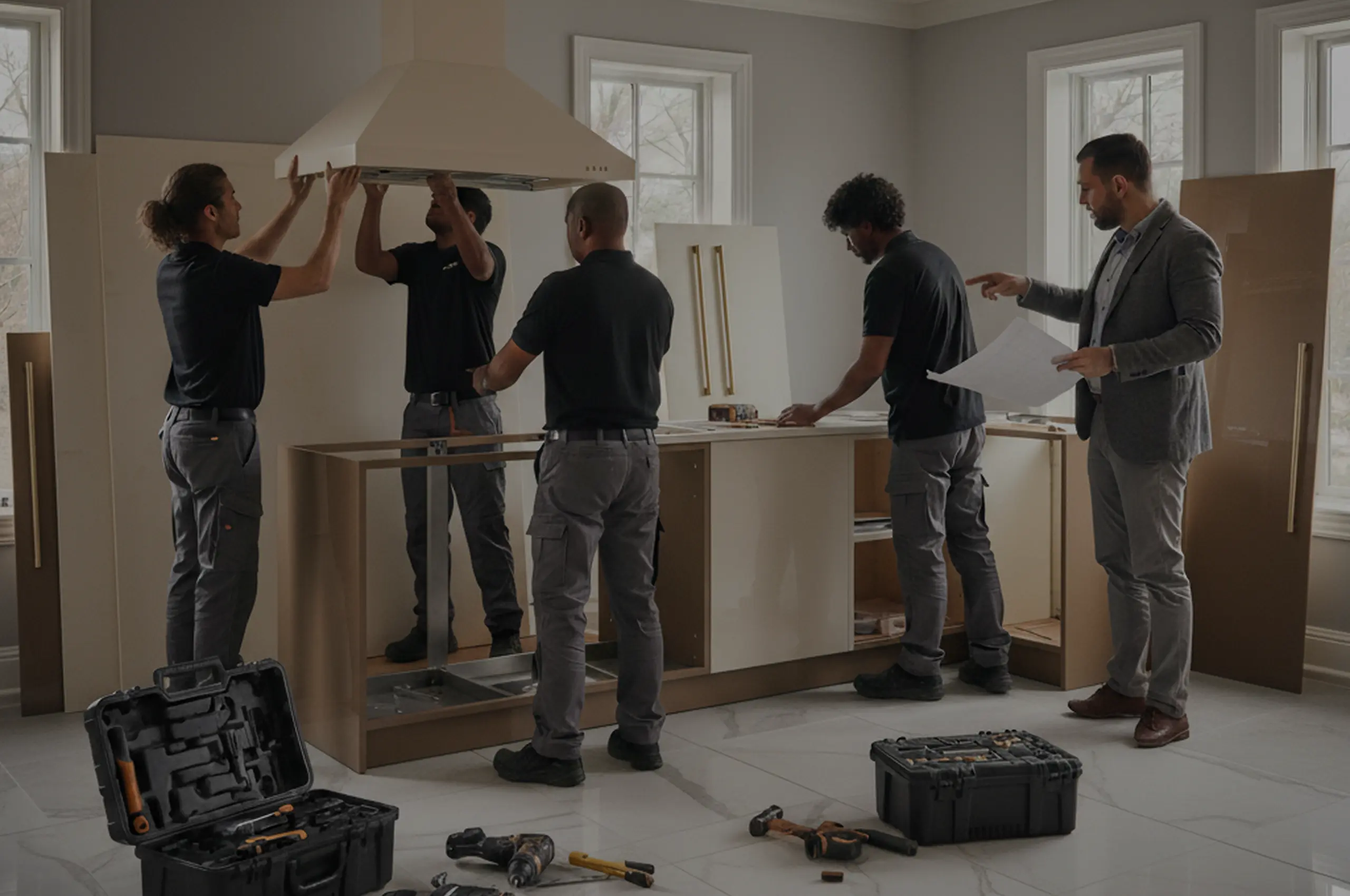
This is the phase most homeowners look forward to. Pre-fabricated kitchen modules — the carcasses, shutters, countertop, and accessories — are brought to site and assembled. A professional installation team works systematically from the base units up, ensuring everything is level, plumb, and properly fixed to the walls and floor.
- Marking and drilling wall fixings for wall-mounted units
- Fitting base units and checking for level across the entire run
- Installing countertop with precise cutouts for sink and hob
- Fitting shutters, handles, and hardware
- Installing internal accessories — pull-outs, baskets, organisers
- Final alignment and adjustment of all doors and drawers

Phase 5 — Finishing and Final Checks
After installation, the kitchen goes through a finishing phase. Plumbers connect the sink and any under-counter plumbing. Electricians wire up the chimney, oven, and any additional outlets. The backsplash tile work or panel installation is completed. All gaps and joints are sealed.
Before final handover, a thorough walkthrough is conducted with the homeowner to check that every element functions correctly, every door closes smoothly, every pull-out runs cleanly, and the overall finish meets the agreed standard. Any snags are noted and addressed before the project is signed off.
After the Renovation: Care and Maintenance
A well-installed modular kitchen is low-maintenance — but it does benefit from regular care. Steel modular kitchens in particular are easy to maintain: a soft cloth and mild detergent is all you need. Avoid abrasive cleaners or harsh chemicals on any cabinet finish. Hardware — hinges, drawer runners, and lift mechanisms — should be checked periodically and lubricated if needed.
Steelax provides detailed care guidelines with every kitchen installation and offers after-sales support to ensure your kitchen continues to perform at its best for years to come. That kind of post-installation assurance is part of what makes the difference between a brand and a vendor.