Two kitchen quotations can show similar shutters and still specify different materials underneath. If you are comparing 304 vs 202 stainless steel, begin with where the cabinets will be used. The sink unit faces a different level of moisture exposure from a cupboard storing dry ingredients, so the most useful answer is often a cabinet-by-cabinet specification.
Galvanised steel, commonly called GI, adds another option for dry areas and budget-led projects. Understanding the role of each material helps you ask for a clearer quotation without turning the decision into a metallurgy lesson.
Table of Contents
- Compare 304 vs 202 stainless steel beneath the finish
- 304 stainless steel for kitchen wet zones
- 202 stainless steel for general kitchen cabinetry
- GI kitchen cabinets for dry areas
- Approximate GI, 202 and 304 kitchen prices
- Mixing steel grades to control kitchen costs
- 304 vs 202 stainless steel and GI: FAQs
Compare 304 vs 202 stainless steel beneath the finish
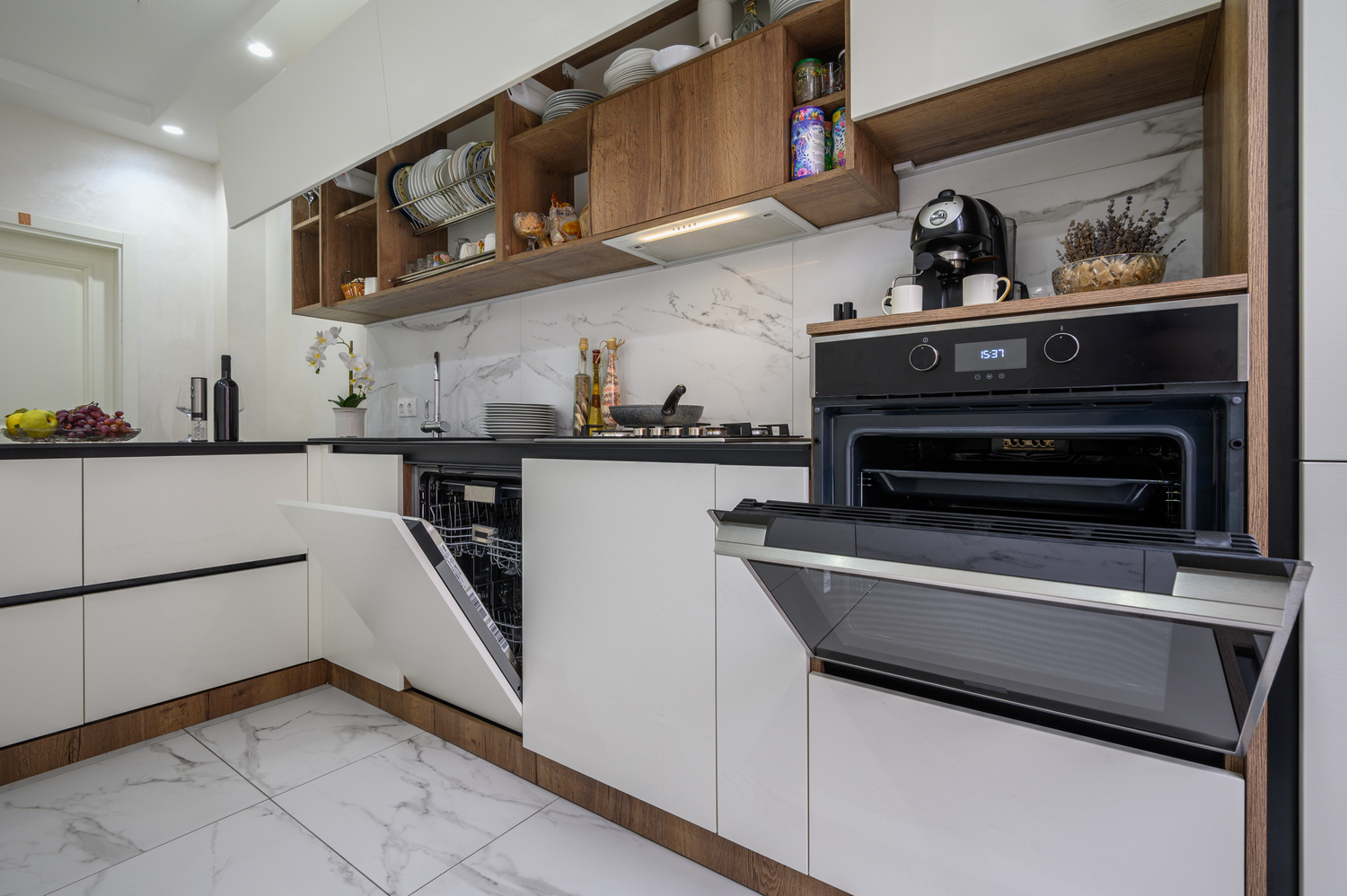
The painted surface is not a reliable guide to the grade inside a cabinet. Matte shutters, for example, can be specified with different underlying metals. Your material schedule should name the grade rather than describe the entire kitchen only as “premium steel”.
Keep external appearance and internal construction as separate decisions. You might choose one finish throughout while using different grades according to exposure. That approach needs to be documented clearly so the finished appearance does not hide uncertainty about the material.
Grade also does not explain every price difference. Panel construction, hardware, size and finish all contribute to a kitchen quote. Once the material is clear, compare those elements separately instead of treating the grade name as a complete measure of quality.
304 stainless steel for kitchen wet zones
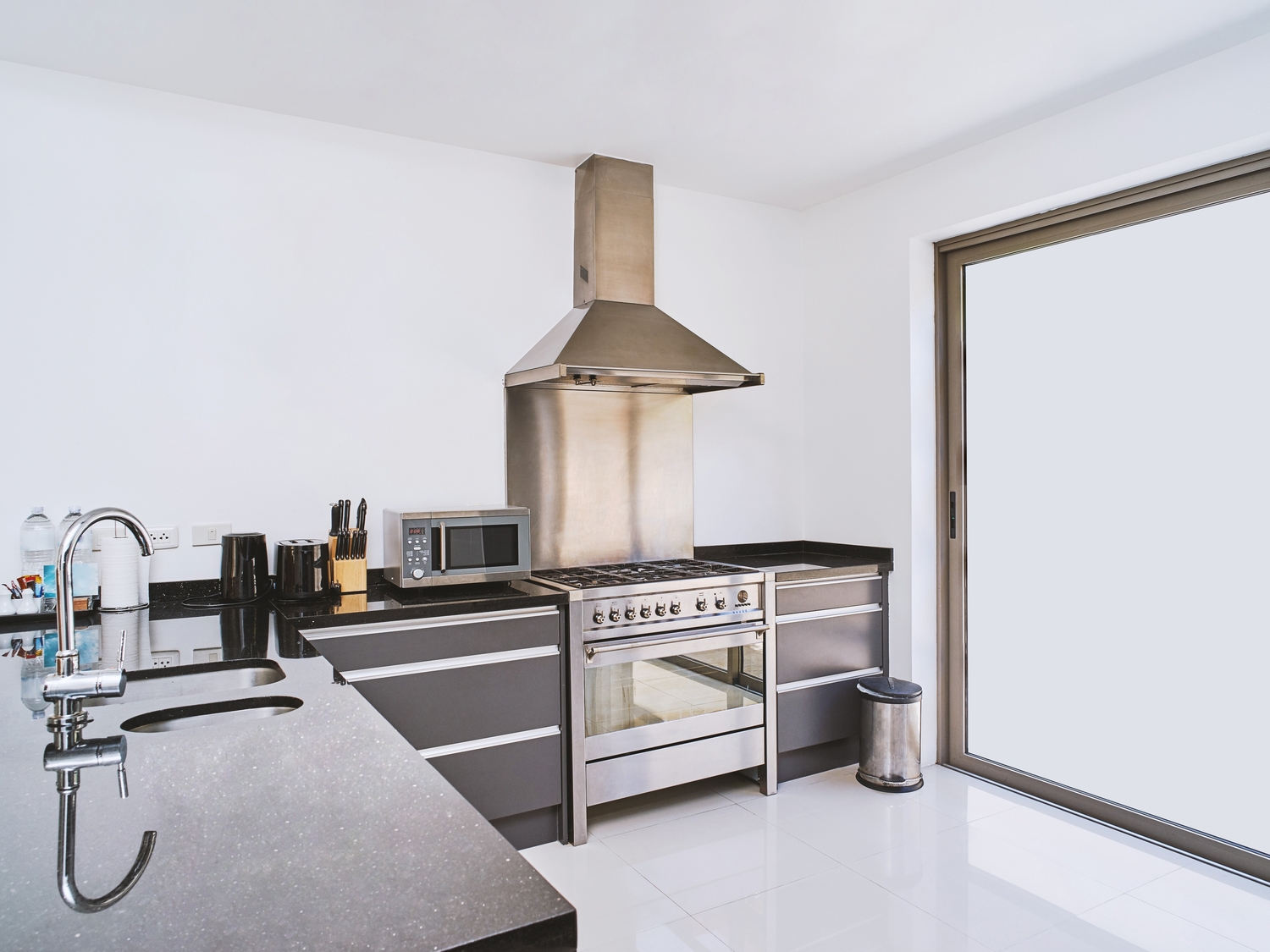
Steelax specifies 304 stainless steel for wet zones and sink modules. Under-sink cabinets are made exclusively in 304. This is the area where the material choice deserves particular attention because plumbing and everyday sink use can expose the cabinet to moisture.
The advantage should be understood as corrosion resistance suited to that application. It is not a reason to leave leaks unresolved or use any cleaning chemical without checking the care instructions. The surrounding floor, wall and fittings still need protection and maintenance.
When reviewing the sink cabinet, ask for its grade to appear explicitly on the order. Our moisture damage article explains the related cabinet concerns. This keeps the discussion focused on the part of the kitchen most likely to face water.
202 stainless steel for general kitchen cabinetry
In Steelax’s specifications, 202 stainless steel is an option for medium-use cabinetry that balances strength and cost. It should be evaluated against the exposure expected in those particular units. Choosing 202 elsewhere does not require compromising the sink cabinet’s 304 specification.
Ask the designer to identify which modules are proposed in 202 and why. A drawing or schedule is more helpful than a verbal statement that one grade is “good enough”. It also makes later revisions easier because the material choice is tied to a defined cabinet.
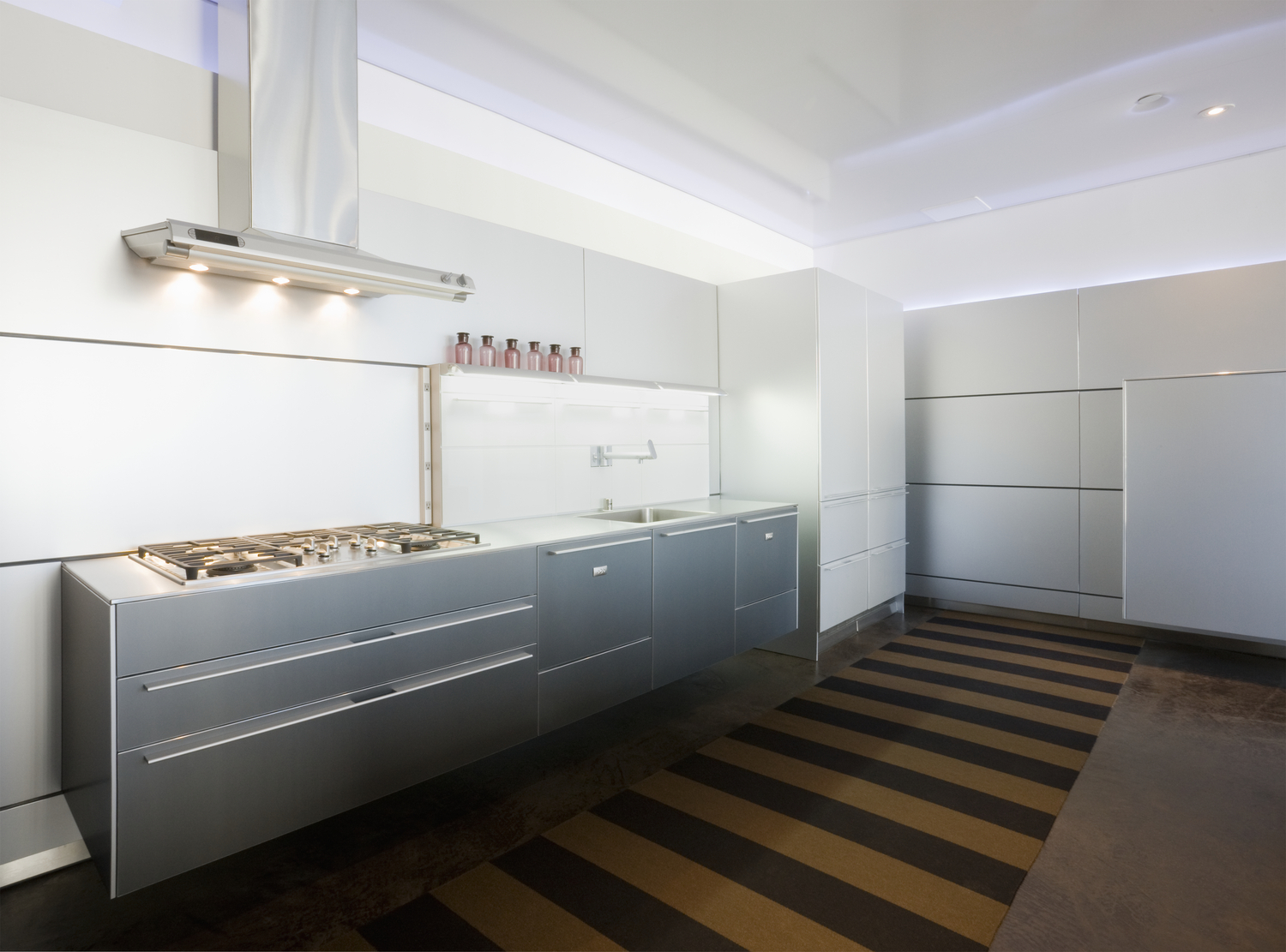
If you would like to see the internal surfaces, our team can show you examples of brushed stainless steel interiors used in 202 and 304 kitchens. That visit helps separate the grade conversation from your preferred shutter colour and finish.
GI kitchen cabinets for dry areas
GI is galvanised steel rather than another stainless steel grade. Steelax positions it for dry areas and budget projects, with a white powder-coated internal finish. It is therefore important to distinguish a GI proposal from one specified entirely in stainless steel.
A lower-cost GI kitchen may be suitable for the right arrangement, especially when wet zones receive their own specification. Ask how the material is protected and which care instructions apply. The relevant comparison is its intended use, not whether the outside resembles a 304 kitchen.
If a quotation uses the term “steel” throughout, request a clearer breakdown. You should be able to tell where GI, 202 and 304 are proposed without relying on assumptions about the finished photographs.
Approximate GI, 202 and 304 kitchen prices
For an 80 sq ft kitchen, Steelax’s references provide the following approximate 2026 planning figures. They help illustrate the material options; they do not establish identical quotation inclusions.
Material option | Intended application in Steelax specifications | Approximate cost |
|---|---|---|
GI | Dry areas and budget-led applications | ₹3.20 lakh |
202 stainless steel | Medium-use general cabinetry | ₹4.00 lakh |
304 stainless steel | Wet zones and sink modules | ₹5.50 lakh |
Site conditions, layout, hardware and finish affect the final price. The gap between these reference figures should not be treated as the price of upgrading one cabinet. A mixed-grade kitchen requires its own measured quotation.
For a fuller explanation of the quote, read our stainless steel kitchen cost guide. It will help you discuss the grade alongside the other items affecting the total.
Mixing steel grades to control kitchen costs
A hybrid specification can use 304 where exposure is high and 202 or GI in appropriate general areas. Steelax offers this approach to balance cost and application. The savings depend on the size and configuration of the kitchen, so ask for an actual alternative quotation.
Check that every version preserves the under-sink 304 specification and identifies any changes elsewhere. Keep the approved material schedule with your order and warranty documents. If you want to understand how the cabinets are built, our manufacturing guide provides additional context.
For help comparing 304 vs 202 stainless steel in your layout, ask our team to review the proposed modules. We can explain the options against the use and budget of your kitchen.
304 vs 202 stainless steel and GI: FAQs
Should I use 304 or 202 stainless steel in a kitchen?
Steelax uses 304 for wet zones and under-sink cabinets, with 202 available for medium-use general cabinetry. Ask for a module-wise material schedule based on expected exposure rather than selecting by grade name alone.
Can I use 304 near the sink and GI elsewhere to save cost?
Steelax offers mixed-grade configurations. Appropriate dry areas can be considered for GI while the under-sink cabinet remains 304. The cost benefit depends on your layout and needs a measured quotation.
Is GI the same as stainless steel?
No. GI is galvanised steel. Steelax positions it differently from 202 and 304 stainless steel, particularly for dry areas and budget applications. The quotation should identify the material clearly.
How can I verify the steel grade?
Ask for the material specification and relevant supporting documentation. Grade verification is covered separately in our forthcoming guide on checking 304 stainless steel; a finish or appearance alone cannot establish it.