

A tandem box is easy to overlook during a kitchen design meeting because the conversation usually begins with layout and finish. Once you move in, however, drawers and hinges are the parts you touch dozens of times a day. Smooth movement, proper load support and good alignment make a kitchen feel well built long after the colour choice has stopped feeling new.
Hardware also has a wide price range. Two products from the same brand can belong to different series and serve different loads. That is why a buyer should ask for the exact hardware specification rather than accepting a sentence such as “premium soft-close included.”
Table of Contents
Why hardware decides how a kitchen feels
Cabinet panels provide the structure, but hardware creates movement. Hinges carry shutter weight. Drawer systems support utensils, pots and groceries. Lift-up fittings hold overhead shutters. Tall-unit mechanisms move a large amount of stored weight through a narrow cabinet.
A weak fitting may still work on installation day. The real test is repeated use and proper alignment. Hardware also depends on the way it is fixed to the cabinet. A quality hinge cannot perform well if the fixing point becomes loose.
Steelax uses stainless steel insert nuts and reinforced fixing methods in its steel cabinetry. The company works with hardware from Hettich, Hafele, Blum, Laranza and Ozone. The useful question for a customer is not which logo appears in the drawer. It is which series has been selected for that drawer and why.

Soft-close hinges, and whether you need them
A soft-close hinge slows the shutter near the end of travel so it does not slam into the cabinet. The benefit is partly comfort and partly control. In a busy kitchen, doors are closed quickly, and a damped hinge reduces the repeated impact on the shutter and cabinet.
You do not need the most complex hinge on every door. A standard soft-close hinge may be enough for common shutters, while a tall, wide or heavy shutter may need a different hinge quantity or specification. Corner doors and unusual opening angles also deserve the correct hardware rather than a generic substitute.
Ask the designer to show the hinge on the quote and explain how many are being used per shutter. If the kitchen has a mix of shutter sizes, it is normal for the hardware plan to vary.
Soft-close is worth paying for when you value quieter daily use and controlled closing. It should not be treated as a luxury label. It is a functional mechanism whose quality depends on the product series and installation.
Tandem boxes and drawer channels
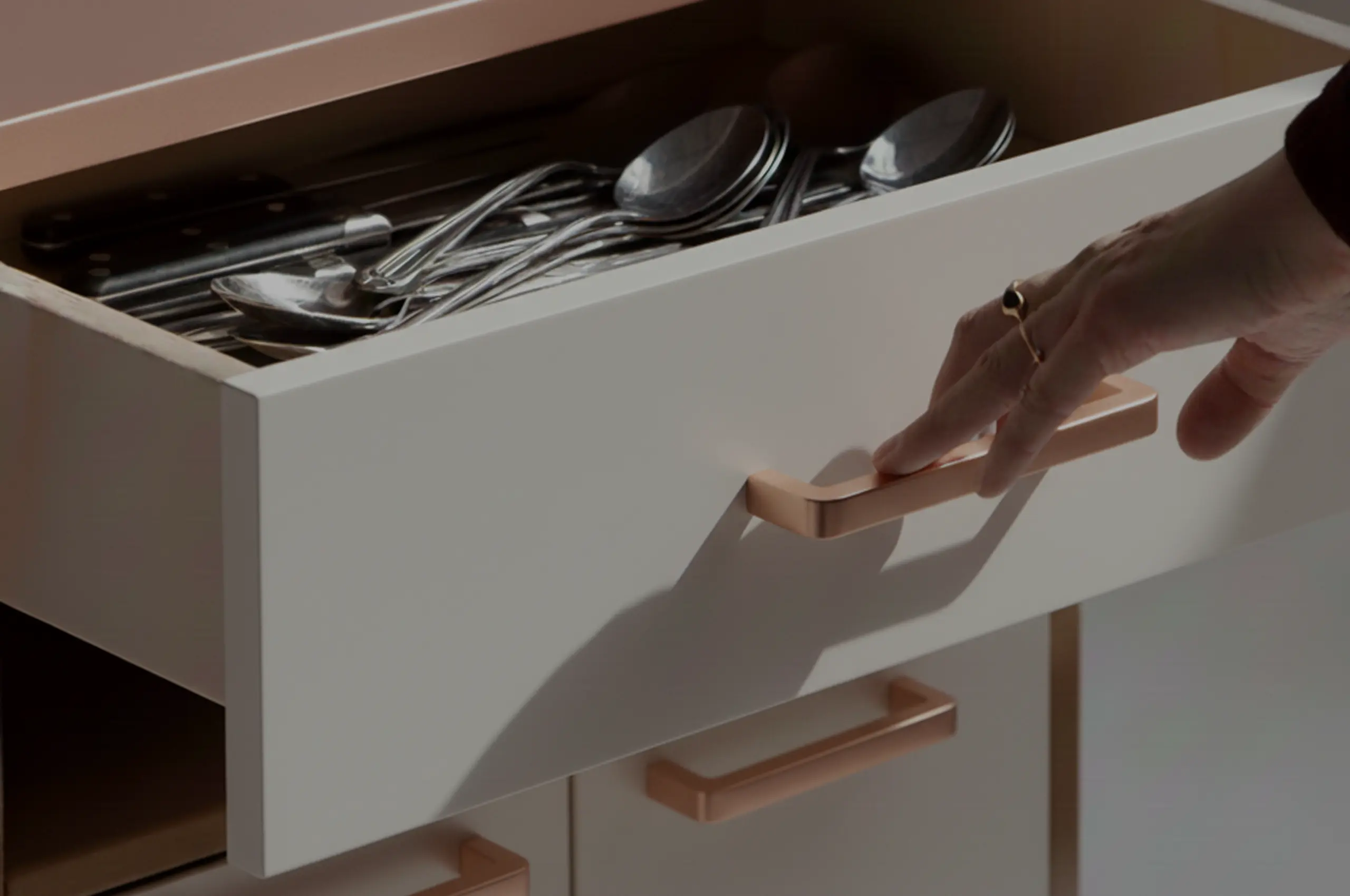
A tandem box is a drawer system designed around smooth runners and a structured drawer side. It is commonly used for cutlery, plates, pots and other kitchen storage because it gives full or near-full access to the drawer and can be paired with soft-close movement.
Traditional drawer channels can also work well, especially for lighter or simpler drawers. The decision depends on load, drawer width, frequency of use and budget. Heavy cookware drawers deserve hardware chosen for that weight rather than the cheapest channel that fits.
Do not guess drawer capacity from appearance. Ask for the load rating of the exact system being quoted and keep the product code with your order documents. That information helps later if a runner needs adjustment or replacement.
Drawer planning is also about height. A deep drawer is not automatically better. Plates, cutlery, spice jars and large pots need different internal heights. A well-planned stack of drawers can reduce bending and stop utensils from being piled on top of each other.
Also ask how the drawer can be adjusted after installation. Kitchens settle into daily use, and a loaded drawer may need minor alignment over time. A system with accessible adjustment and replaceable parts is easier to maintain than one whose model cannot be identified later. Keep the hardware schedule with your invoice so service does not begin with guesswork.
Hettich, Hafele and Blum compared
All three names cover broad hardware ranges, so a brand-level “which lasts longer” answer is not very useful. Durability depends on the exact series, rated load, shutter or drawer size, installation and daily use. Compare like with like.
| Comparison point | What to ask Hettich, Hafele or Blum for |
| Exact series | Product code, not only brand name |
| Application | Hinge, drawer, lift-up, tall unit or sliding system |
| Rated load | Written load rating for the selected drawer or mechanism |
| Soft-close type | Integrated or add-on damping, if relevant |
| Adjustment | How the hinge or runner can be aligned after installation |
| Warranty | Written manufacturer or seller terms for that product |
| Local support | Availability of replacement parts and service |
A designer may use one brand for hinges and another for a specialised accessory. That is not automatically a problem. The hardware schedule should be built around the application and budget rather than loyalty to one logo.
If two quotes use different brands, ask for equivalent series and load. The cheaper brand may be a stronger series while the more expensive name may be an entry series. Without product details, the comparison is incomplete.
Steel TV units with a wood finish
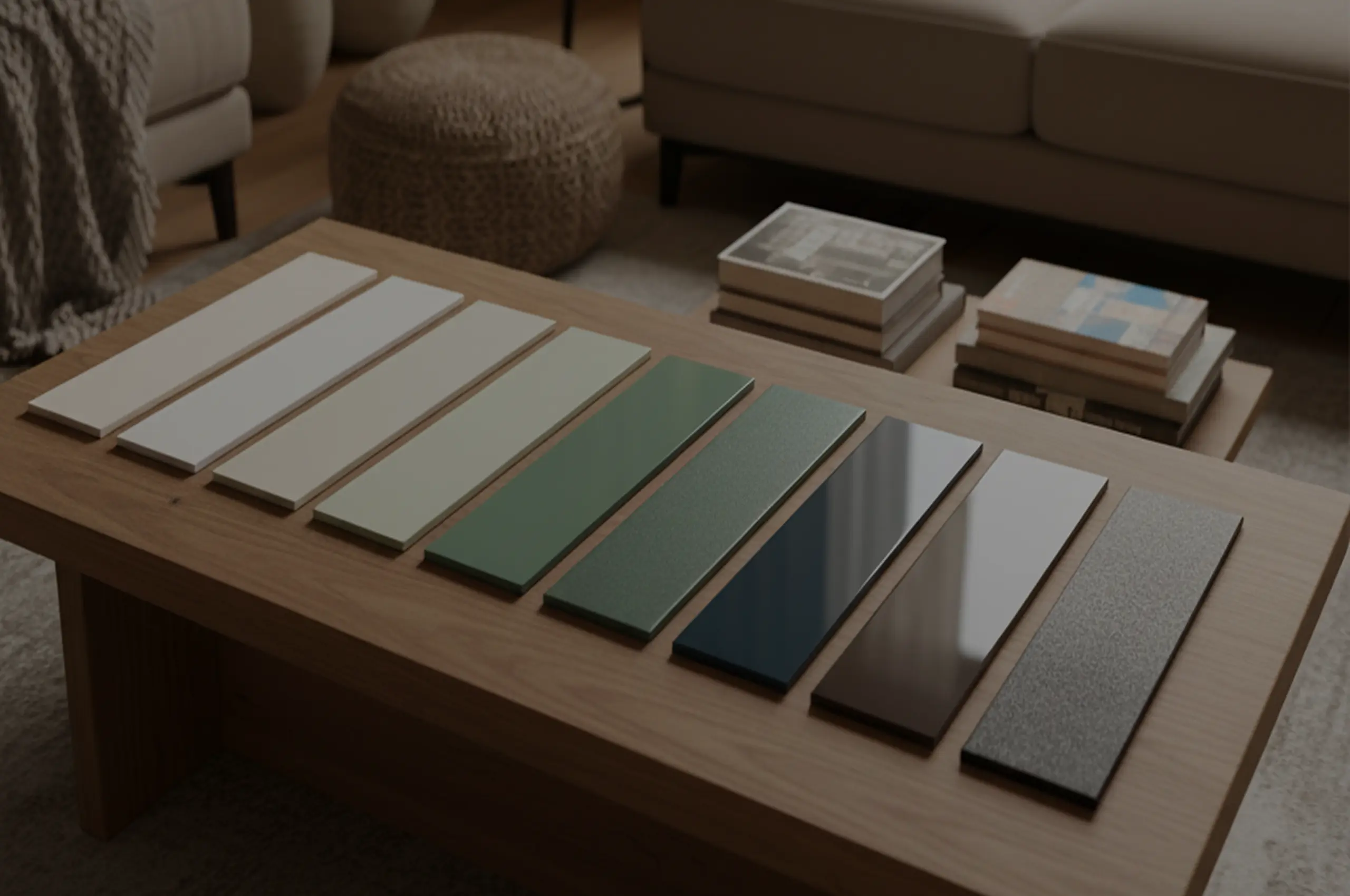
A steel TV unit does not have to look metallic. Steelax’s in-house PU finishing system offers more than 500 colour and surface choices, including wood-look finishes along with matte, glossy, textured and metallic options. The structure stays steel while the room can still have the warmth of a timber-style surface.
That can be useful in living rooms that already have wooden doors, beige flooring or warm furniture. The finish can coordinate with those elements without using a wood-based cabinet core. Steel also avoids termite feeding and does not swell like a wood core after water exposure.
The construction should still feel residential. Steelax uses dual-sheet 18 mm panels with a rubber insulation core and reinforced fixing methods. Handle a full-size shutter or drawer before ordering so you can judge the sound and feel yourself.
Matching the unit to your living room
A small room usually benefits from lower, lighter storage. Keep tall modules away from narrow passages and avoid very deep cabinets unless they solve a real storage need. In a larger room, the TV unit can carry more visual weight, but it should still relate to the sofa width and viewing distance.
Colour also changes scale. A dark full-wall unit can feel heavy in a compact room, while a pale or wood-look finish can sit more quietly. Matte surfaces are often forgiving in high-touch areas, though the choice should follow the rest of the room rather than a trend.
If the TV wall shares space with the dining area, decide whether the two functions should connect. A side cabinet can hold crockery while the central console stays low. This can be more useful than designing two unrelated pieces on the same wall.

Ordering a custom TV unit from Steelax
Bring the TV size, a photograph of the wall and the position of power and data points to the first discussion. A site measure should confirm wall width, skirting, switchboards and any concealed wiring. The designer can then plan the storage around the technology instead of hiding problems behind a decorative panel.
Steelax can produce the unit in steel with a finish chosen to suit the room. If you want the cabinet to resemble wood, ask to see a large wood-look sample under similar lighting before approving the colour.
Gallery image plan
- Floating wood-look steel console with concealed drawers. Alt text: “Wall-mounted wood-look steel TV unit with low drawers in a modern Lucknow living room.”
- Matte neutral media wall with side storage. Alt text: “Matte steel TV wall with closed side cabinets and concealed cable management.”
- Compact apartment TV console. Alt text: “Small wall-mounted TV unit with minimal steel storage for an apartment living room.”
- Full media wall with display niche. Alt text: “Full-height steel media wall with television, closed storage and a restrained display niche.”
- Floor-standing console. Alt text: “Freestanding steel TV console with drawers and open device shelf.”
- TV and crockery combination. Alt text: “Custom steel TV unit connected to a tall crockery cabinet in a living-dining room.”
Frequently asked questions
What are the latest TV unit designs for the living room?
Low floating consoles, simple TV back panels and media walls with limited side storage are useful because they keep the screen zone calm and make cable management easier. The best design depends on room width, storage need and device access rather than one particular style.
What is the price of a wall-mounted TV unit?
A custom wall-mounted unit needs a measured quote. Width, drawers, hardware, finish, back panel and storage depth all change the price. Ask for the dimensions and module list on the quotation so you can see exactly what you are paying for.
Can I get a steel TV unit that looks like wood?
Yes. Steelax offers wood-look PU finishes over a steel cabinet structure, along with matte, glossy, metallic and textured choices. View a larger sample before finalising because grain scale and colour can look different on a full wall.
Is a floating TV unit practical for Indian homes?
It can be very practical if wall fixing, device ventilation and cable access are planned correctly. The open floor makes cleaning easier and the unit looks lighter. Make sure there is still a service route for power, internet and entertainment cables.
What should I measure before ordering a TV unit?
Record the wall width, TV size, power points, data points, skirting, nearby doors and the devices that need storage. A final site measure should confirm everything before production.
If you want a made-to-measure unit, Steelax can measure the wall and build a steel TV unit around your screen, devices and storage needs.
[…] hardware guide explains common fittings. If you are comparing a carpenter kitchen with a Steelax proposal, you can […]
[…] hardware guide explains common fittings. If you are comparing a carpenter kitchen with a Steelax proposal, you can […]