
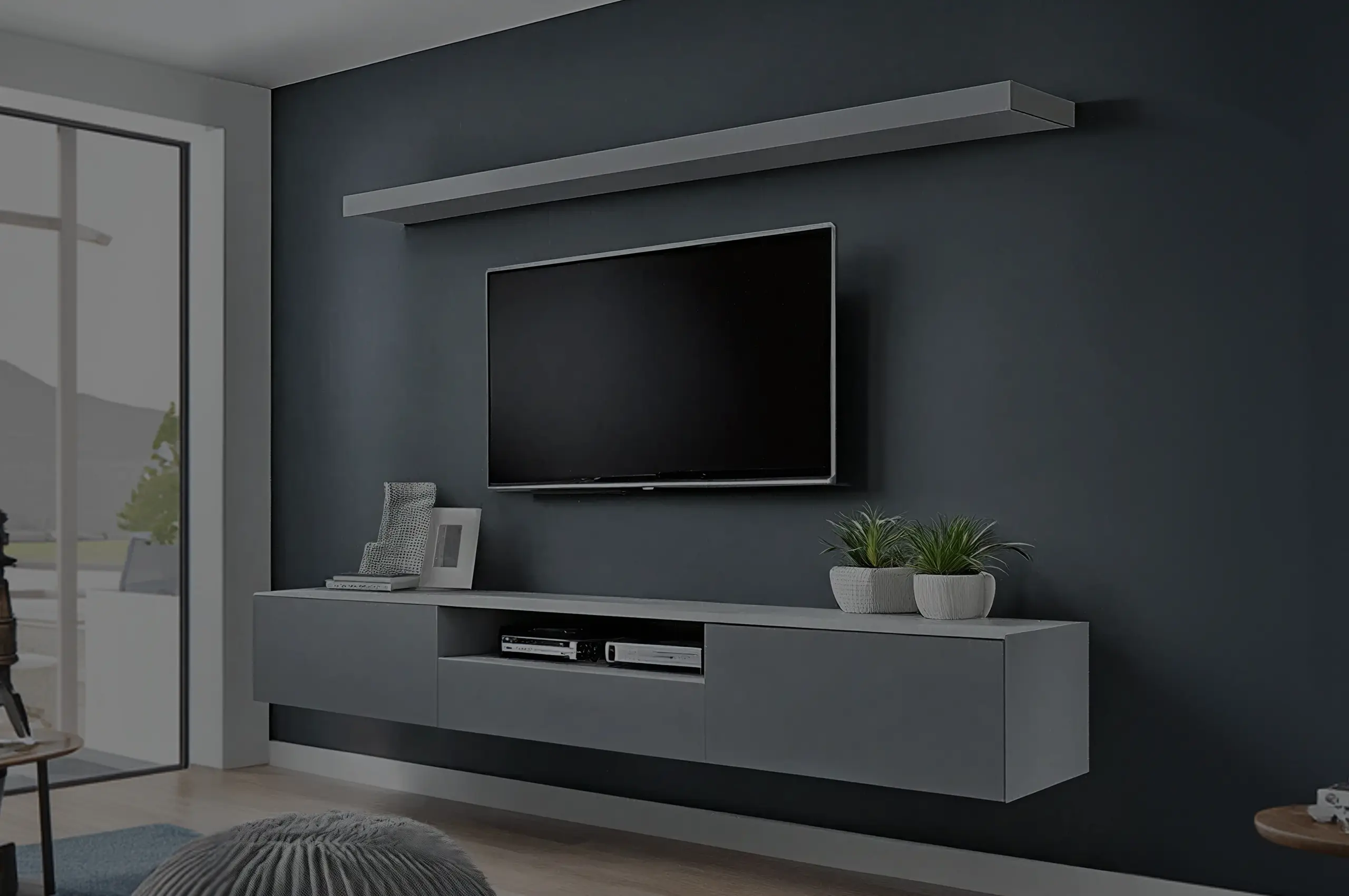
A tv unit design has two jobs that are easy to underestimate. It has to organise the screen, wires, router, speakers and small devices, while also occupying one of the most visible walls in the living room. A unit can look impressive in a render and still be irritating if the remote does not work through a closed shutter or the electrician cannot reach the power point later.
For most homes, the best design is the one that keeps the wall calm and makes the technology easy to service. Size, storage and cable planning come first. Finish comes after those decisions are working.
Table of Contents
What makes a TV unit work in daily life
Begin with the screen and the viewing position. The unit should be planned around the television size you own now and the largest size you are realistically likely to buy later. Leave enough room for ventilation and access rather than trapping the screen inside a tight decorative frame.
Next, list every device that needs a home. A set-top box, router, gaming console, soundbar and streaming device all have different ventilation and signal needs. Some should stay open. Others can sit behind a shutter if the material and hardware allow the remote or cable route to work properly.
Cable management is not a finishing detail. Power, data, speaker and HDMI routes should be discussed before the back panel is produced. A removable or accessible service area saves a lot of frustration later.
Storage should be honest too. If the living room needs drawers for documents, remotes or chargers, include them. If the unit is mostly decorative, do not add tall cabinets simply to fill the wall.

TV unit styles Lucknow homes are choosing
A low floating console is one of the cleanest options for apartments. It keeps the floor visible, gives a light visual footprint and provides enough storage for everyday devices. The wall above can remain simple or carry a slim panel behind the TV.
A full media wall uses more of the width and height. It can combine closed storage, display niches and a larger backing panel. This works well in a broad living room but needs restraint. Too many open shelves create dusting work and can make the television feel lost inside decoration.
A floor-standing console is practical when wall fixing is difficult or when the family wants furniture that can move. It is also easier to modify later. The design should still leave space for cable access behind it.
For homes that need more storage, a TV unit can extend into a side tower or crockery cabinet. Keep the screen zone visually clear and let storage sit to one side rather than surrounding every edge.
Wall-mounted TV unit prices
There is no responsible fixed price for a made-to-measure wall-mounted TV unit without dimensions and specification. The cost is driven by width, cabinet depth, number of drawers, hardware, backing panel, open shelving, finish and the amount of steel or other material used.
A useful quotation should separate those items. Ask the designer to show the overall dimensions, storage modules, finish and hardware before quoting. If a large wall panel is part of the design, check whether it is included in the same price or treated as a separate decorative surface.
| Design type | Main cost drivers | Usually best for |
| Floating low console | Width, drawers, shutter finish, wall fixing | Apartments and clean living rooms |
| Console with TV back panel | Panel size, cable access, finish, lighting provision | Homes wanting a more finished TV wall |
| Full media wall | Tall units, open shelves, hardware, total material | Larger rooms needing more storage |
| Floor-standing unit | Cabinet size, legs or plinth, drawers | Homes that value portability |
| TV plus crockery storage | Additional tower modules, glass, hardware | Dining-living spaces needing combined storage |
Ask for a measured price, not a generic online rate. A smaller unit with many drawers and premium hardware can cost more than a wider, simpler console.
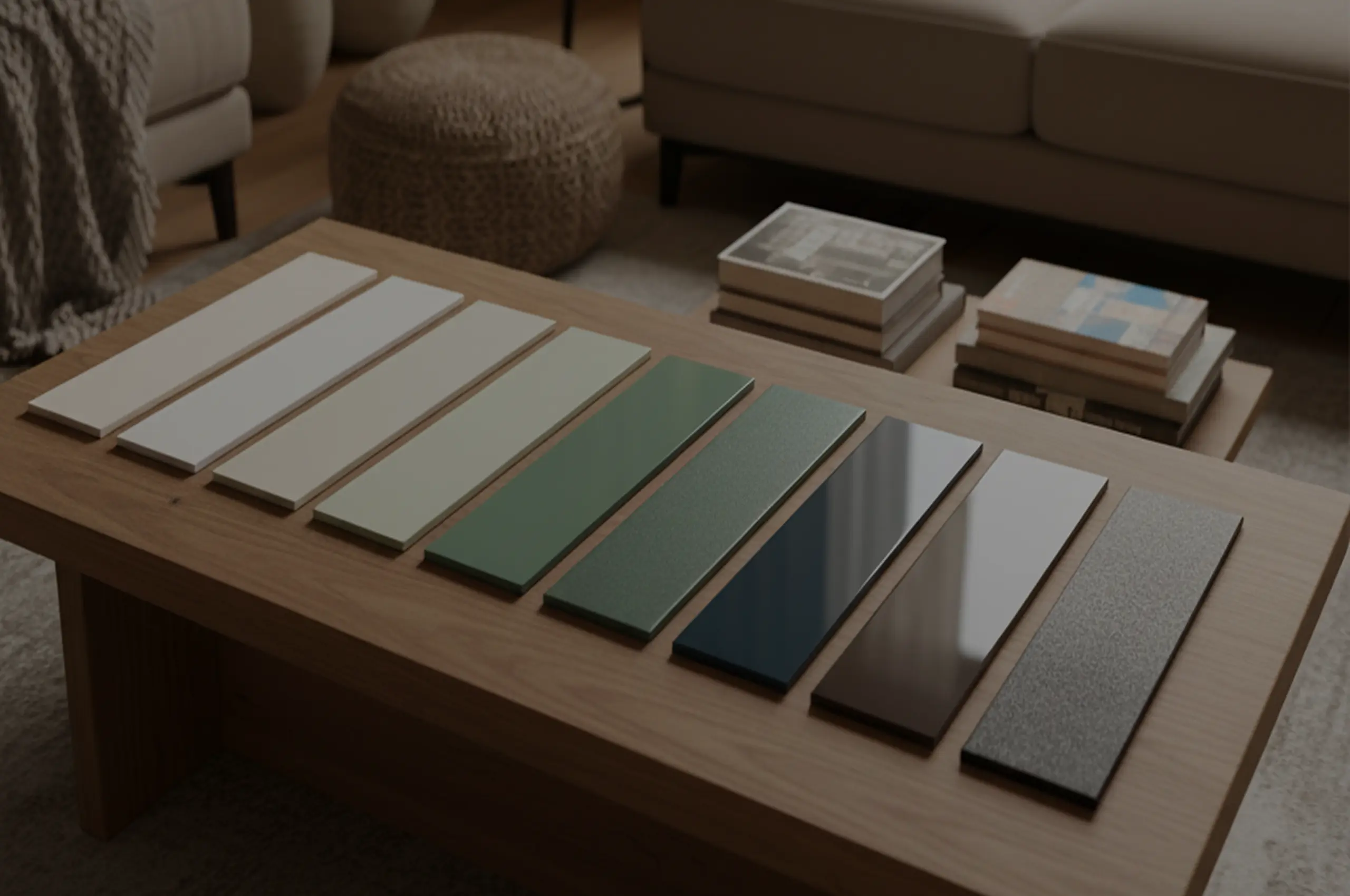
Steel TV units with a wood finish
A steel TV unit does not have to look metallic. Steelax’s in-house PU finishing system offers more than 500 colour and surface choices, including wood-look finishes along with matte, glossy, textured and metallic options. The structure stays steel while the room can still have the warmth of a timber-style surface.
That can be useful in living rooms that already have wooden doors, beige flooring or warm furniture. The finish can coordinate with those elements without using a wood-based cabinet core. Steel also avoids termite feeding and does not swell like a wood core after water exposure.
The construction should still feel residential. Steelax uses dual-sheet 18 mm panels with a rubber insulation core and reinforced fixing methods. Handle a full-size shutter or drawer before ordering so you can judge the sound and feel yourself.
Matching the unit to your living room
A small room usually benefits from lower, lighter storage. Keep tall modules away from narrow passages and avoid very deep cabinets unless they solve a real storage need. In a larger room, the TV unit can carry more visual weight, but it should still relate to the sofa width and viewing distance.
Colour also changes scale. A dark full-wall unit can feel heavy in a compact room, while a pale or wood-look finish can sit more quietly. Matte surfaces are often forgiving in high-touch areas, though the choice should follow the rest of the room rather than a trend.
If the TV wall shares space with the dining area, decide whether the two functions should connect. A side cabinet can hold crockery while the central console stays low. This can be more useful than designing two unrelated pieces on the same wall.

Ordering a custom TV unit from Steelax
Bring the TV size, a photograph of the wall and the position of power and data points to the first discussion. A site measure should confirm wall width, skirting, switchboards and any concealed wiring. The designer can then plan the storage around the technology instead of hiding problems behind a decorative panel.
Steelax can produce the unit in steel with a finish chosen to suit the room. If you want the cabinet to resemble wood, ask to see a large wood-look sample under similar lighting before approving the colour.
Gallery image plan
- Floating wood-look steel console with concealed drawers. Alt text: “Wall-mounted wood-look steel TV unit with low drawers in a modern Lucknow living room.”
- Matte neutral media wall with side storage. Alt text: “Matte steel TV wall with closed side cabinets and concealed cable management.”
- Compact apartment TV console. Alt text: “Small wall-mounted TV unit with minimal steel storage for an apartment living room.”
- Full media wall with display niche. Alt text: “Full-height steel media wall with television, closed storage and a restrained display niche.”
- Floor-standing console. Alt text: “Freestanding steel TV console with drawers and open device shelf.”
- TV and crockery combination. Alt text: “Custom steel TV unit connected to a tall crockery cabinet in a living-dining room.”
Frequently asked questions
What are the latest TV unit designs for the living room?
Low floating consoles, simple TV back panels and media walls with limited side storage are useful because they keep the screen zone calm and make cable management easier. The best design depends on room width, storage need and device access rather than one particular style.
What is the price of a wall-mounted TV unit?
A custom wall-mounted unit needs a measured quote. Width, drawers, hardware, finish, back panel and storage depth all change the price. Ask for the dimensions and module list on the quotation so you can see exactly what you are paying for.
Can I get a steel TV unit that looks like wood?
Yes. Steelax offers wood-look PU finishes over a steel cabinet structure, along with matte, glossy, metallic and textured choices. View a larger sample before finalising because grain scale and colour can look different on a full wall.
Is a floating TV unit practical for Indian homes?
It can be very practical if wall fixing, device ventilation and cable access are planned correctly. The open floor makes cleaning easier and the unit looks lighter. Make sure there is still a service route for power, internet and entertainment cables.
What should I measure before ordering a TV unit?
Record the wall width, TV size, power points, data points, skirting, nearby doors and the devices that need storage. A final site measure should confirm everything before production.
If you want a made-to-measure unit, Steelax can measure the wall and build a steel TV unit around your screen, devices and storage needs.
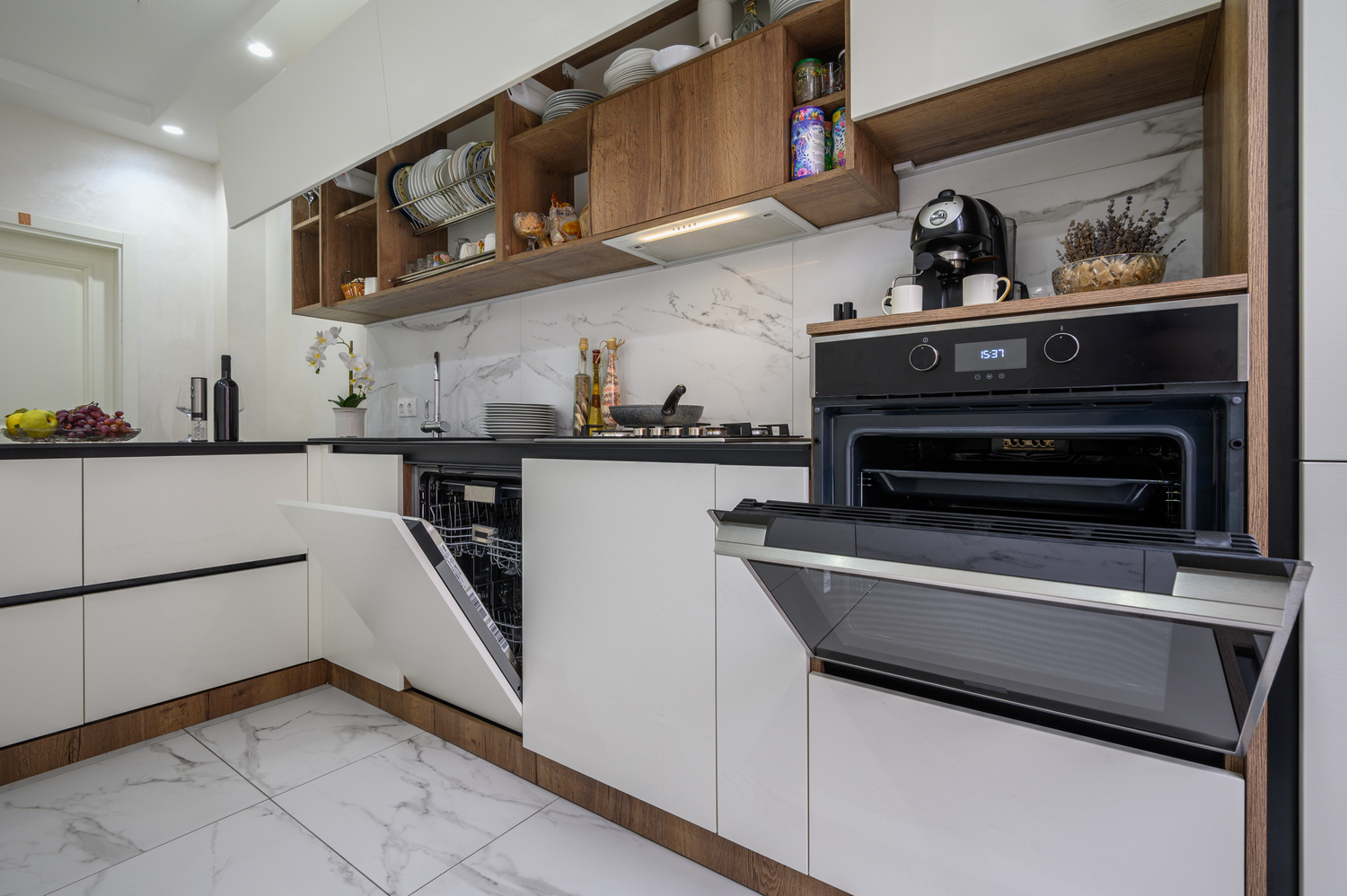
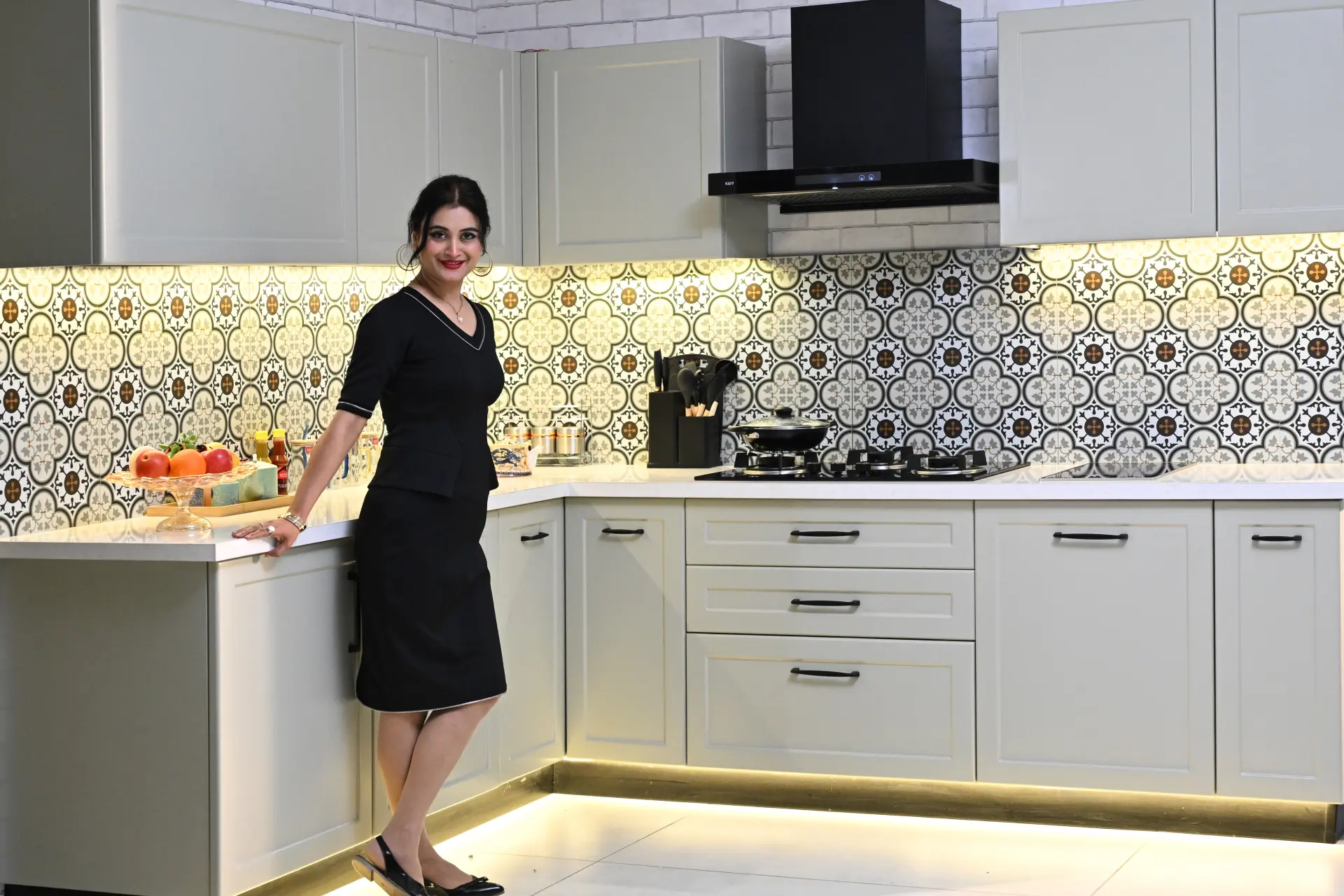
[…] accessible sockets and ventilation should be resolved before the elevations are approved. The TV unit design guide covers the visual choices in more […]
[…] accessible sockets and ventilation should be resolved before the elevations are approved. The TV unit design guide covers the visual choices in more […]