Table of Contents
- Why Indian Kitchens Are Different
- One Layout Doesn’t Suit Every Family
- Designing Around Everyday Cooking Habits
- Storage That Matches Indian Households
- Creating Efficient Work Zones
- Materials That Handle Indian Kitchen Conditions
- The Importance of Personalization
- Building a Kitchen Around Your Lifestyle
Why Indian Kitchens Are Different
Walk into kitchens across different countries, and you’ll immediately notice how cooking habits shape the space. Indian kitchens, in particular, have unique demands that standard modular layouts often fail to address.
Cooking here involves multiple utensils, pressure cookers, mixers, spice boxes, rolling boards, large pots, oil containers, and an ever-growing collection of cookware. Meals are often prepared from scratch, requiring longer preparation times and greater movement between storage, washing, and cooking areas.
Unlike kitchens designed primarily for quick meal preparation, Indian kitchens are active workspaces that need to support intensive daily use.
This is why copying a catalogue design or an international kitchen trend rarely produces the best results. A kitchen should reflect how the family cooks, not just how it looks.
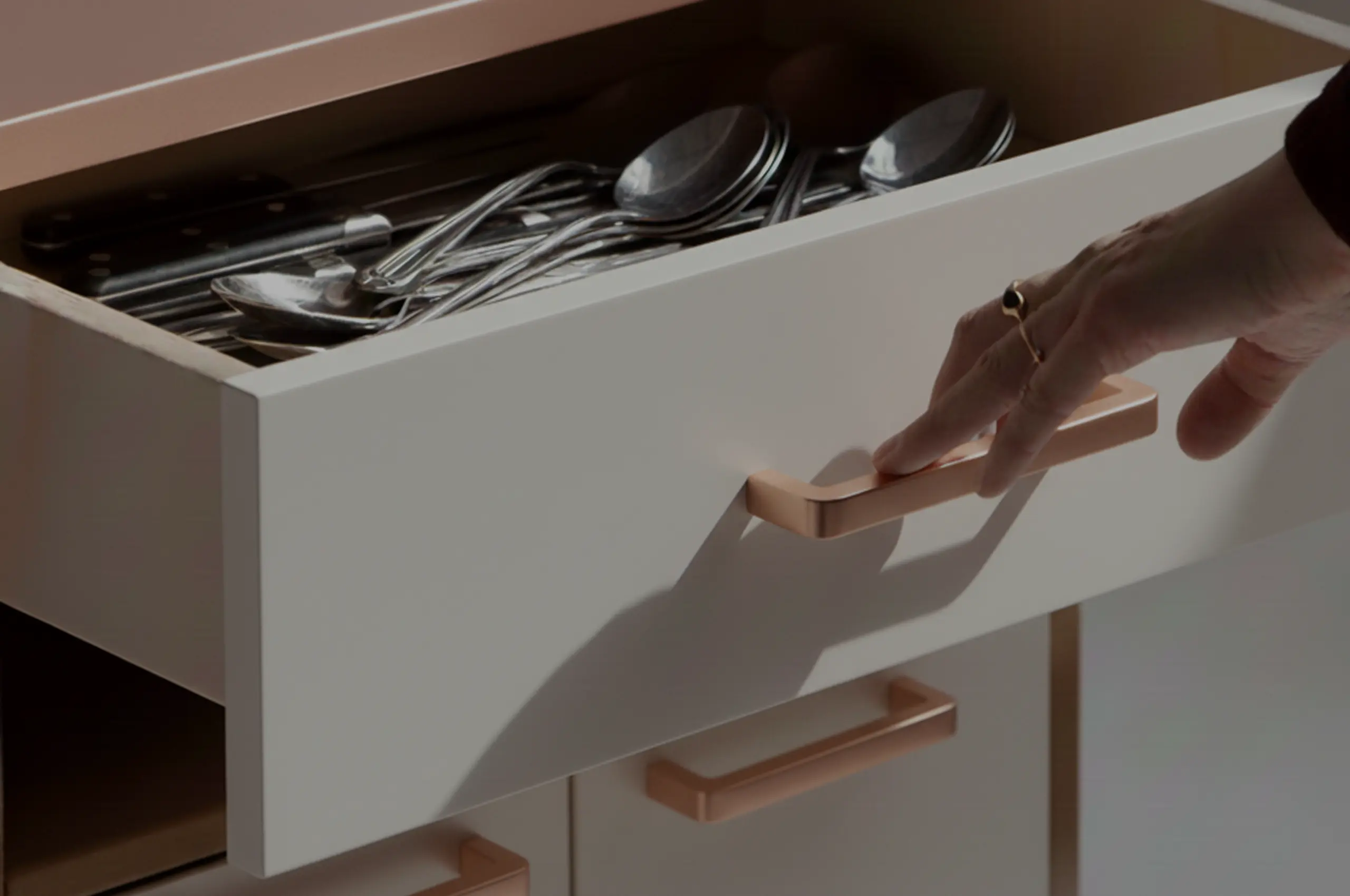
One Layout Doesn't Suit Every Family
Even within India, no two households use their kitchens in exactly the same way.
Some families cook three elaborate meals every day, while others prepare simpler dishes. Some require dedicated storage for bulk groceries purchased monthly, while others prefer compact weekly storage. A family that entertains guests frequently will have very different storage requirements from a young couple living in an apartment.
These differences make customization essential.
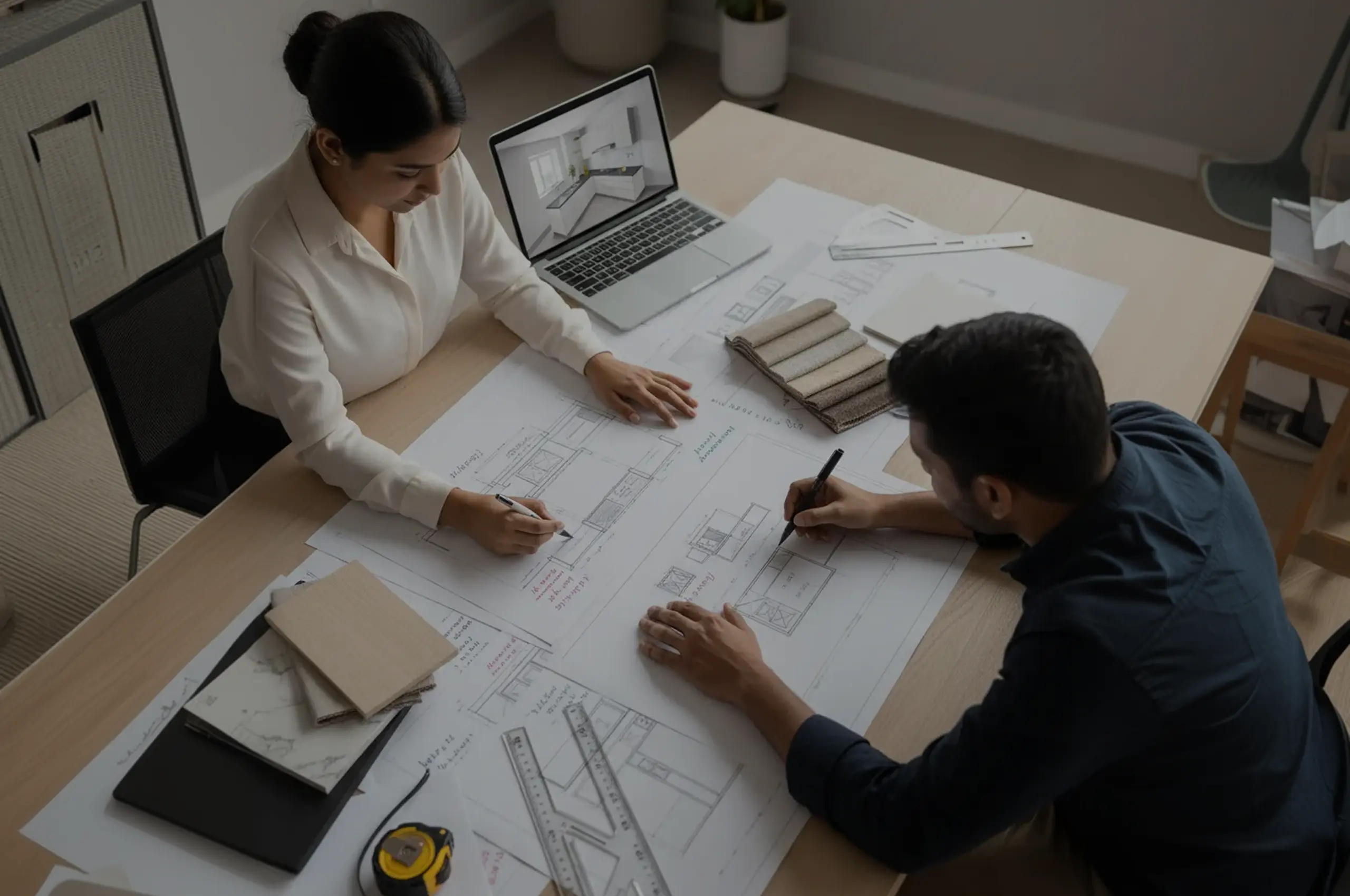
Instead of forcing every homeowner into a standard layout, modern modular kitchens begin by understanding lifestyle. Designers study cooking patterns, storage habits, appliance preferences, and the number of people using the kitchen before recommending a layout.
The result is a kitchen that feels intuitive because it has been planned around the family rather than around fixed cabinet sizes.
Designing Around Everyday Cooking Habits
The best kitchen layouts reduce unnecessary movement.
Preparing an Indian meal often involves washing vegetables, chopping ingredients, accessing spices, cooking multiple dishes simultaneously, and cleaning along the way. If these activities require constant walking across the kitchen, everyday cooking quickly becomes tiring.
Custom layouts solve this by carefully positioning work zones.
The sink, preparation area, cooktop, and refrigerator are arranged to create a natural workflow. Frequently used utensils remain close to the cooking area, while spices, oils, and condiments are stored within easy reach of the stove.
Small planning decisions like these have a significant impact on daily comfort.
A kitchen should support the cook’s movements rather than interrupt them.
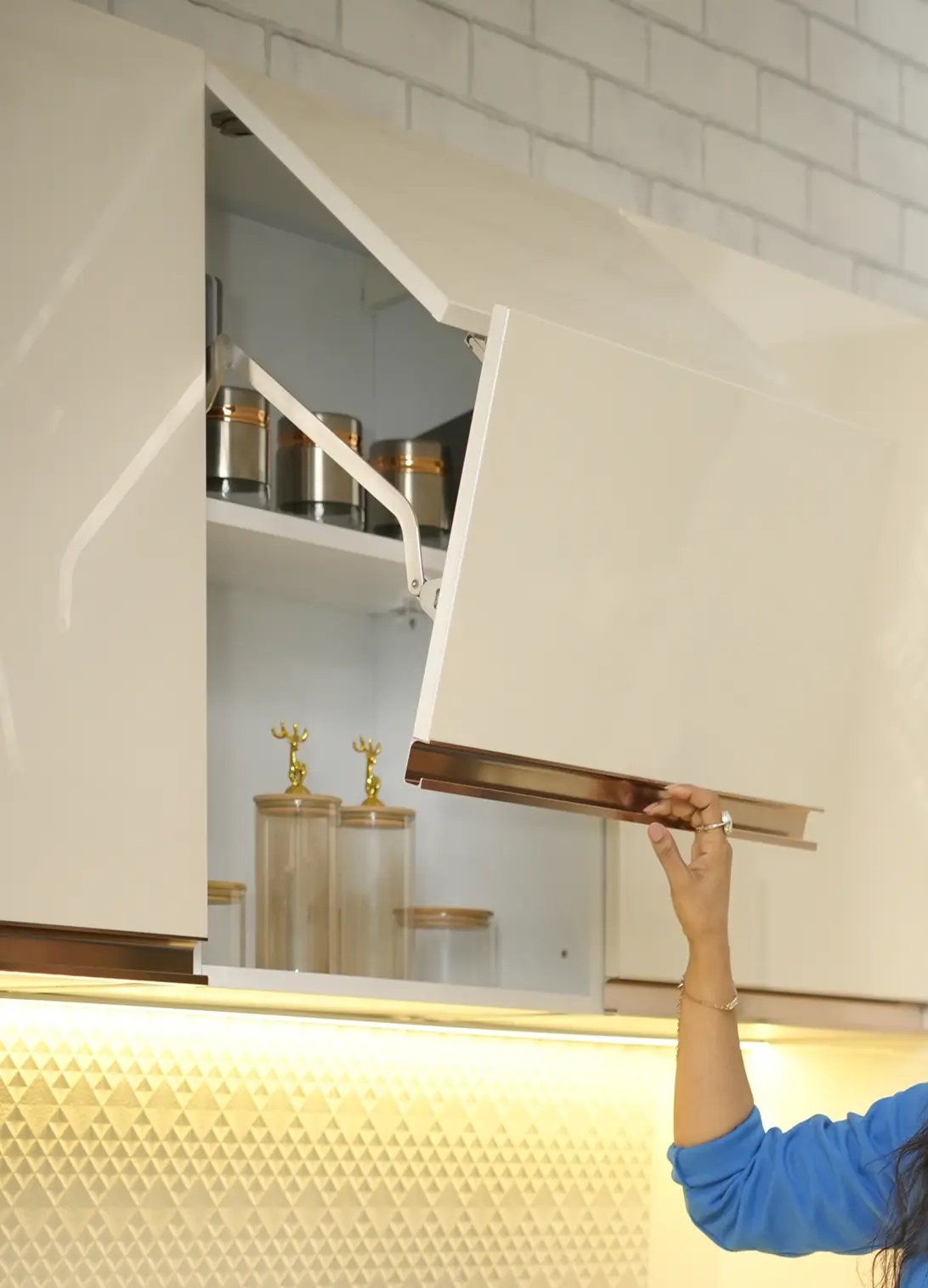
Storage That Matches Indian Households
Storage planning is one of the biggest reasons homeowners choose custom modular kitchens.
Indian households typically require considerably more storage than many international kitchen designs anticipate. Large cookware, festival utensils, serving dishes, pressure cookers, mixer jars, flour containers, lentils, spices, and bulk grocery supplies all require dedicated space.
Rather than relying on oversized cabinets that become difficult to organize, modular kitchens divide storage into purpose-built sections.
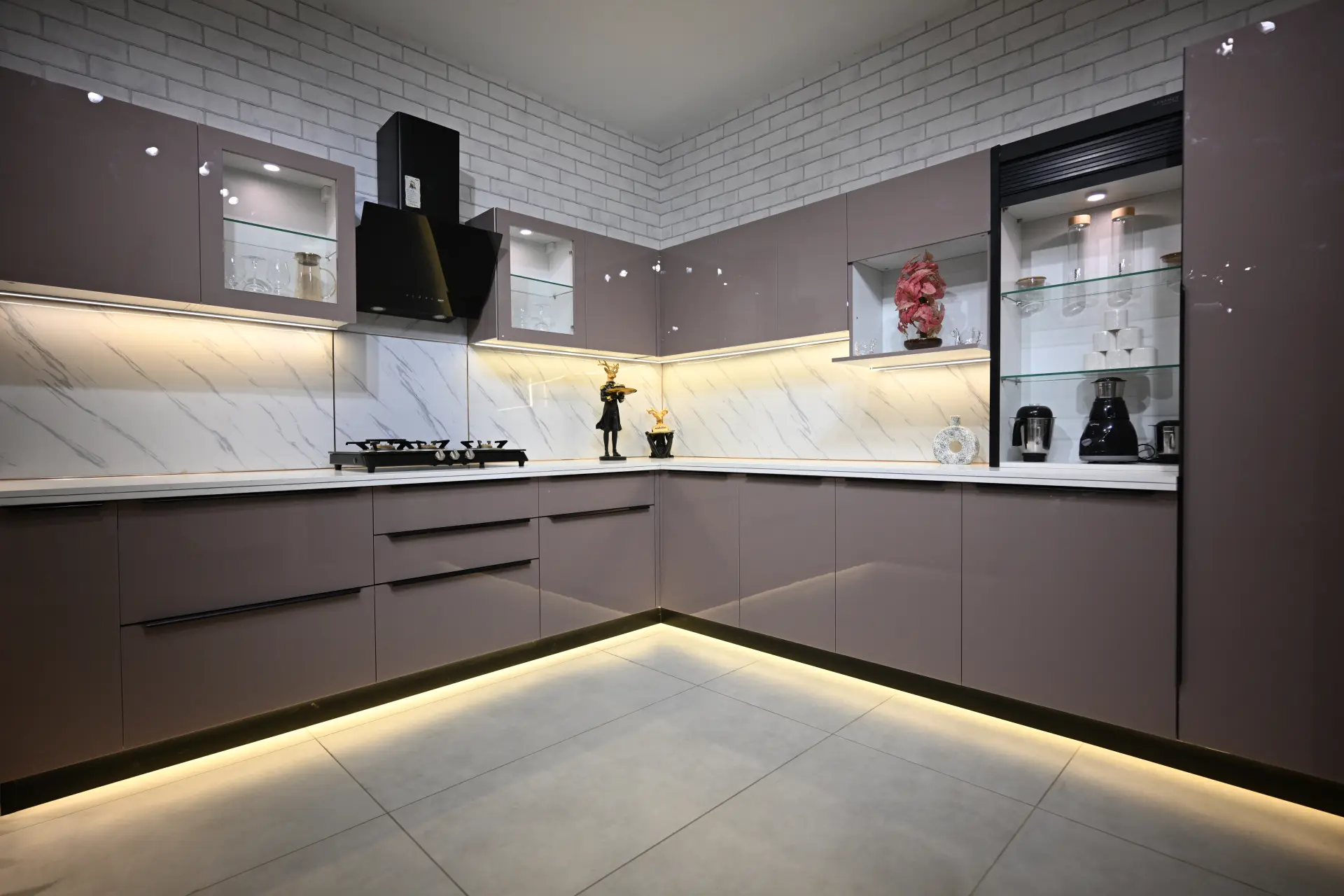
Deep drawers can accommodate heavy cookware without making it difficult to access. Tall pantry units help organize groceries vertically, while pull-out bottle units, spice organizers, and corner storage systems make use of areas that might otherwise remain underutilized.
The objective is not simply to fit more items into the kitchen but to make every item easier to find and access.
When storage is planned around actual household habits, the kitchen remains organized with far less effort.
Creating Efficient Work Zones
Every kitchen consists of several functional areas that work together throughout the day.
There is a preparation zone where ingredients are cleaned and chopped. A cooking zone centered around the hob. A cleaning zone near the sink and dishwasher. A storage zone for groceries, utensils, and cookware.
In many poorly planned kitchens, these areas overlap unnecessarily, leading to congestion and interrupted workflows.
Custom layouts clearly define each zone while maintaining smooth movement between them. This becomes particularly valuable when multiple family members are using the kitchen simultaneously.
Whether someone is preparing vegetables while another person cooks or cleans, the layout should allow everyone to work comfortably without getting in each other’s way.
This level of efficiency is rarely achieved through standardized kitchen designs.
Materials That Handle Indian Kitchen Conditions
Indian kitchens are exposed to conditions that place significant demands on interior materials.
Daily cooking generates steam, heat, oil vapours, and moisture. Frequent cleaning, water exposure around sinks, and changing weather conditions further increase wear over time.
Choosing materials that can withstand these conditions is just as important as choosing the right layout.
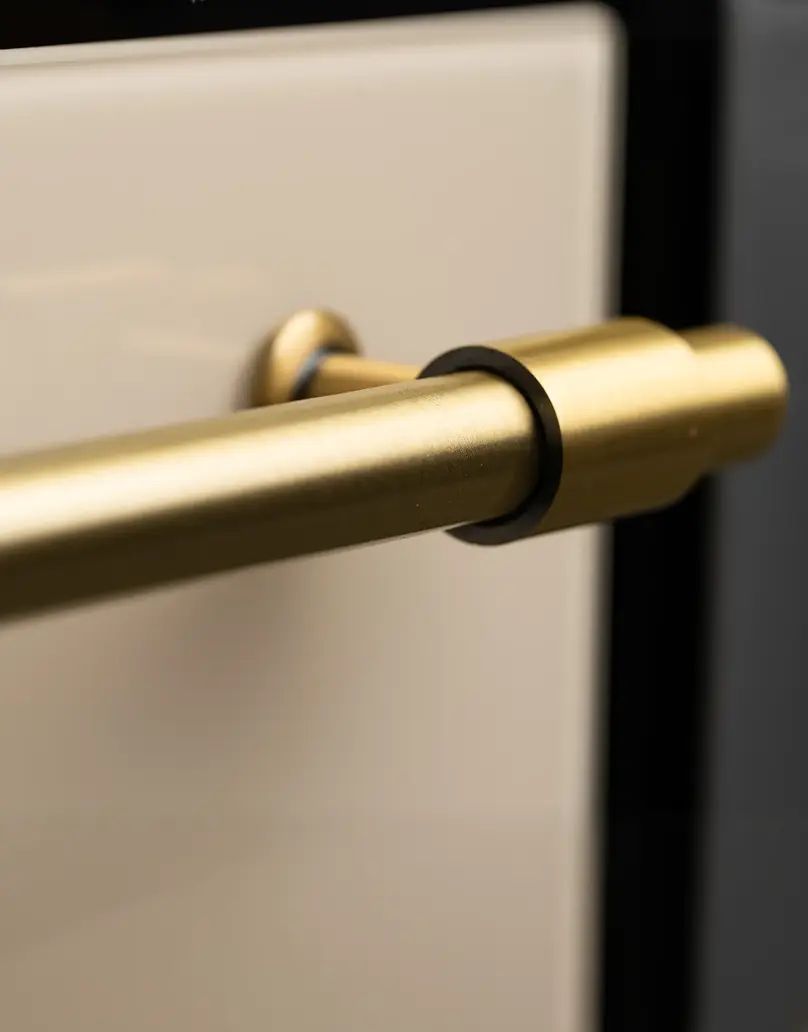
This is one reason stainless steel modular kitchens have gained popularity among homeowners looking for long-term durability. Steel structures offer excellent resistance to moisture, termites, and corrosion while maintaining their strength even under intensive daily use. Steelax further enhances performance through engineered sound-insulated panels and premium finishes that combine durability with contemporary aesthetics.
A thoughtfully designed kitchen should perform as beautifully after years of use as it does on the day it is installed.
The Importance of Personalization
No amount of premium hardware or luxurious finishes can compensate for a kitchen that doesn’t suit its users.
Personalization goes beyond selecting colours or shutter designs. It involves deciding the height of countertops, positioning appliances based on convenience, creating dedicated storage for everyday essentials, and ensuring the layout reflects the family’s cooking habits.
These details may seem small individually, but together they determine how enjoyable the kitchen is to use every day.
A customized kitchen doesn’t ask homeowners to change their routines. It adapts to them.
Building a Kitchen Around Your Lifestyle
The best modular kitchens are not designed around trends. They are designed around people.
Indian cooking is diverse, dynamic, and deeply personal. A kitchen should respect that by offering layouts that improve efficiency without compromising comfort or aesthetics.
By combining intelligent planning, customized storage, durable materials, and precision manufacturing, homeowners can create kitchens that support their lifestyle for decades.
For families searching for the Best Modular Kitchens in Lucknow, customization should be viewed as an essential part of the design process rather than an optional upgrade. Brands like Steelax Lucknow understand that every household cooks differently, which is why thoughtfully engineered layouts, premium stainless steel construction, and personalized storage solutions come together to create kitchens that are as functional as they are beautiful.