Table of Contents
- Audit before you design
- Hanging zones by garment length
- Folding zones by fabric behaviour
- Accessories, shoes, and special items
- Shared and seasonal wardrobes
- Build a personal wardrobe map
Your Clothes Should Design the Wardrobe
Many wardrobes repeat shelves, drawers, and one hanging rail. The result looks orderly in a drawing but may not suit what the owner actually wears. Sarees become tall, unstable stacks, dresses touch the floor, shirts waste vertical space, and accessories gather in unrelated boxes.
A better process begins with a clothing audit. You do not need to count every T-shirt, but you should understand the proportion of long hanging, short hanging, folded garments, accessories, footwear, and occasional items. This turns the wardrobe from generic furniture into a practical dressing tool.
First, Separate Clothes by How They Behave
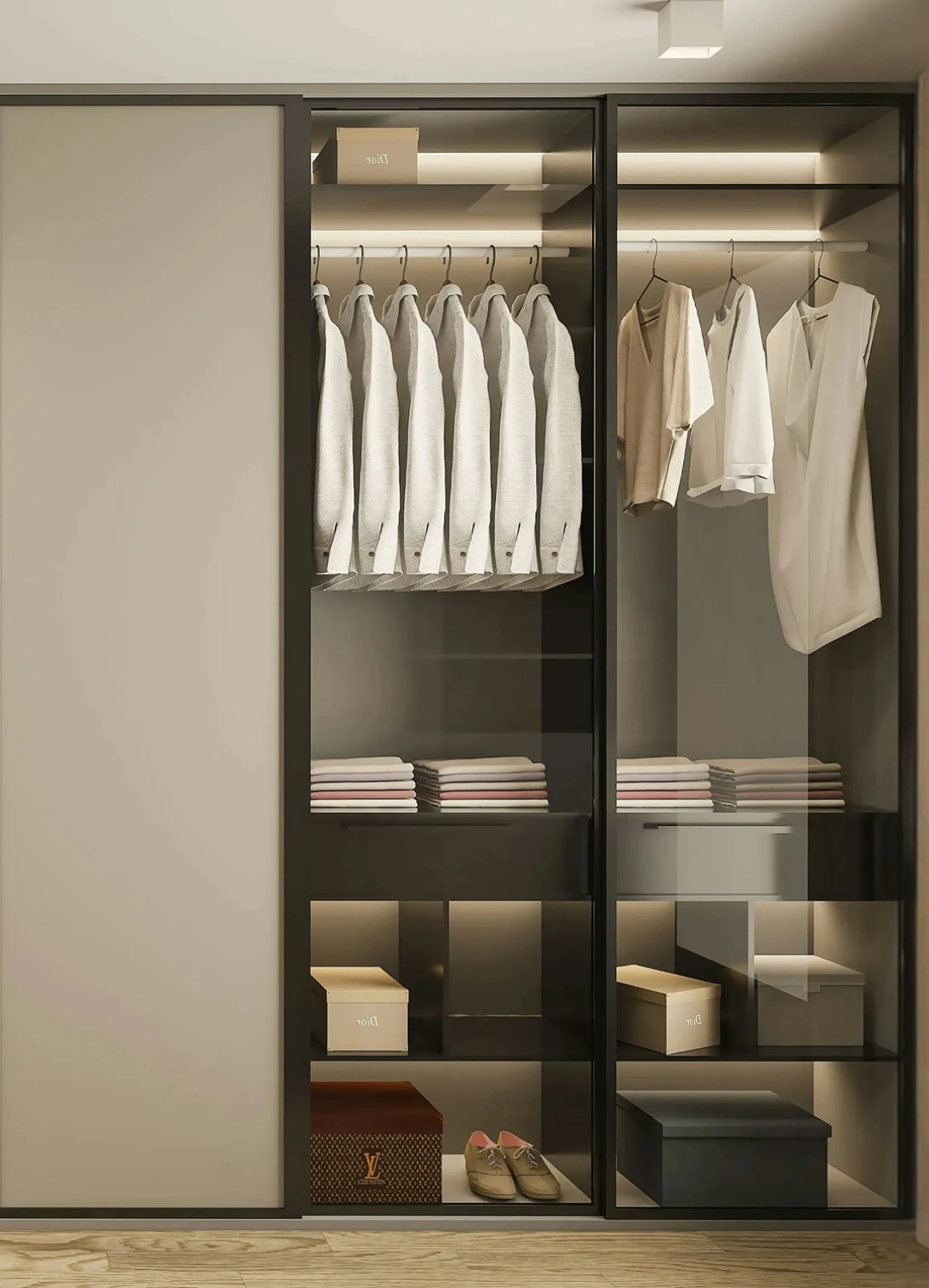
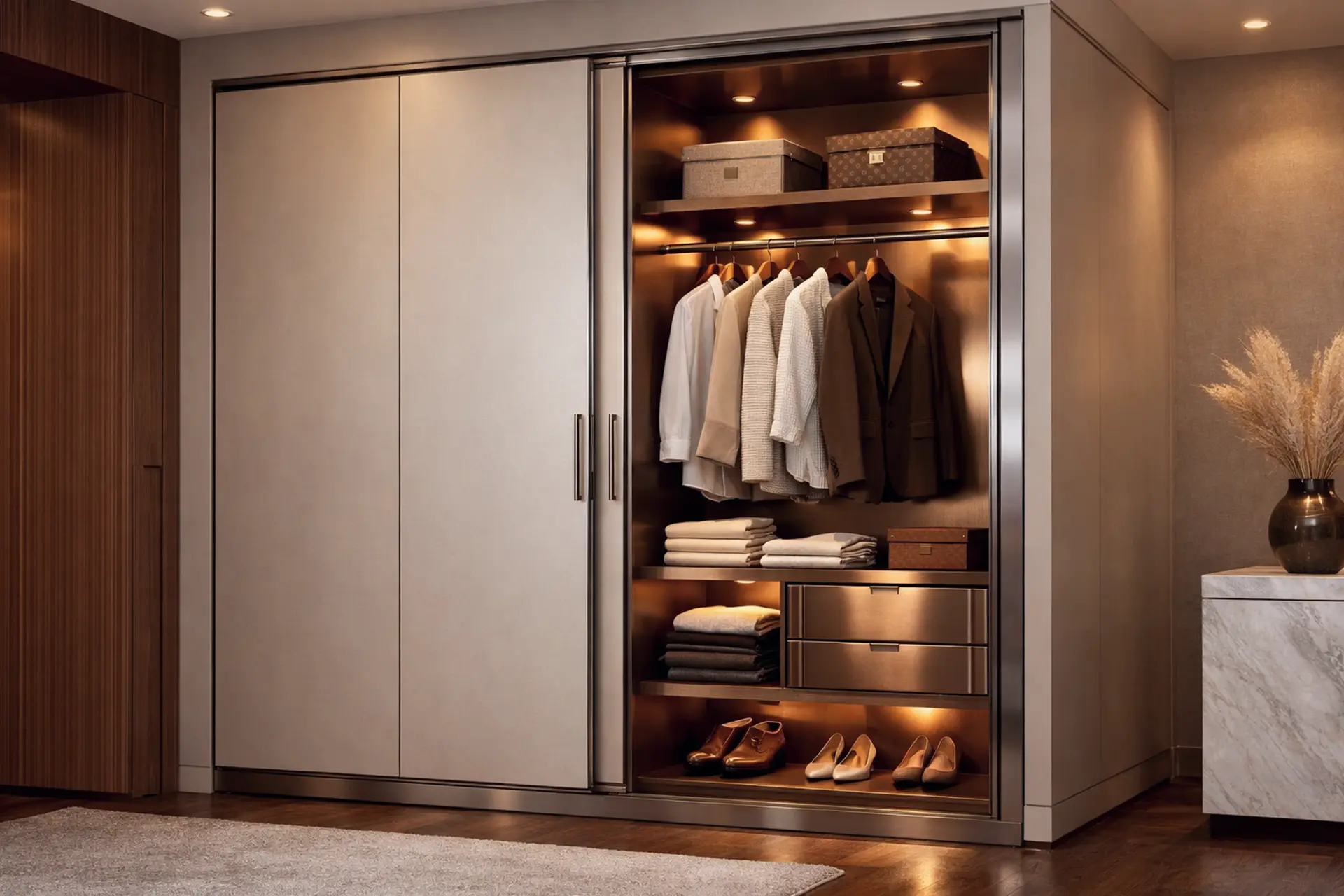
Some garments must hang to avoid creasing. Others stretch or lose shape if hung. Heavy pieces need sturdy support. Delicate fabrics need protected surfaces and space to breathe. Create five broad groups: long hanging, short hanging, folding, drawers, and special storage.
Also identify frequency. Workwear and daily ethnic wear belong in the easiest zone between shoulder and knee height. Occasion clothing can occupy upper or side sections. Seasonal pieces can move into loft storage or labelled containers.
Plan Long Hanging for Dresses and Long Garments
Full-length dresses, coats, long kurtas, and certain formal pieces need uninterrupted vertical clearance. Measure the longest garment on its hanger and add a little breathing space. Avoid placing a drawer chest underneath if it causes hems to bunch.
If you own only a few long garments, a narrow dedicated bay is more efficient than making the entire wardrobe tall hanging. If long clothing dominates, increase this zone and consider a lower shelf for protected footwear or boxes, provided garments remain clear.
Use Double Hanging for Shirts, Jackets, and Trousers
Short garments can often be arranged on two rails, one above the other. This doubles hanging capacity without increasing wardrobe width. Shirts, blouses, short jackets, and folded-over trousers work well here.
Check the actual garment drop before fixing rail heights. Leave comfortable hand access to the upper rail, or consider a pull-down hanger for taller cabinets. Heavy wardrobes require rails and supports designed for the expected load, not just the visual layout.
Give Sarees, Suits, and Ethnic Wear Flexible Options
Sarees can be folded on shelves, stored in shallow pull-outs, or hung on specialised rods depending on preference and fabric. Wide, low stacks are easier to manage than tall piles. Shelf height should prevent excessive stacking, which makes lower pieces hard to remove.
Salwar suits and coordinated sets benefit from shallow shelves, drawers, or labelled organisers that keep components together. Heavy lehengas and embroidered occasion wear need generous space and strong support. Breathable garment covers are generally more suitable than tightly sealing fabric that needs air circulation.
Fold Knitwear and Everyday Basics
Sweaters and many knitted garments can stretch on hangers, so shelves or drawers are safer. Adjustable shelving lets you change stack heights as seasons shift. Keep stacks moderate and divide wide shelves so clothes do not collapse sideways.
T-shirts, activewear, nightwear, and innerwear are often easier to see in drawers. File folding can reveal each item at once, while drawer dividers prevent categories from mixing. Shallow drawers suit small pieces; deeper drawers work for bulky clothing and blankets.
Create Small, Precise Homes for Accessories
Accessories are easily lost in large compartments. Use slim drawers or trays for watches, jewellery, belts, ties, sunglasses, and small personal items. Handbags should stand upright when possible, with dividers supporting their shape. Hooks can serve frequently used belts or bags, but their placement should not interfere with shutters.
Footwear needs shelves sized to actual pairs, with ventilation and easy cleaning. Tall boots require a separate height. Keep shoe storage away from fresh linens unless compartments are clearly separated.
Plan Shared Wardrobes Without Daily Conflict
For couples or siblings, divide the wardrobe by user first, then by category. Shared overhead space can hold luggage or bedding, but daily drawers and hanging zones should have clear ownership. This prevents one person’s storage pattern from disrupting the other’s routine.
Children’s wardrobes need lower access now and adjustability for later. Movable shelves and rails allow the interior to evolve as clothing sizes and independence change.
Match the Cabinet to Long-Term Use
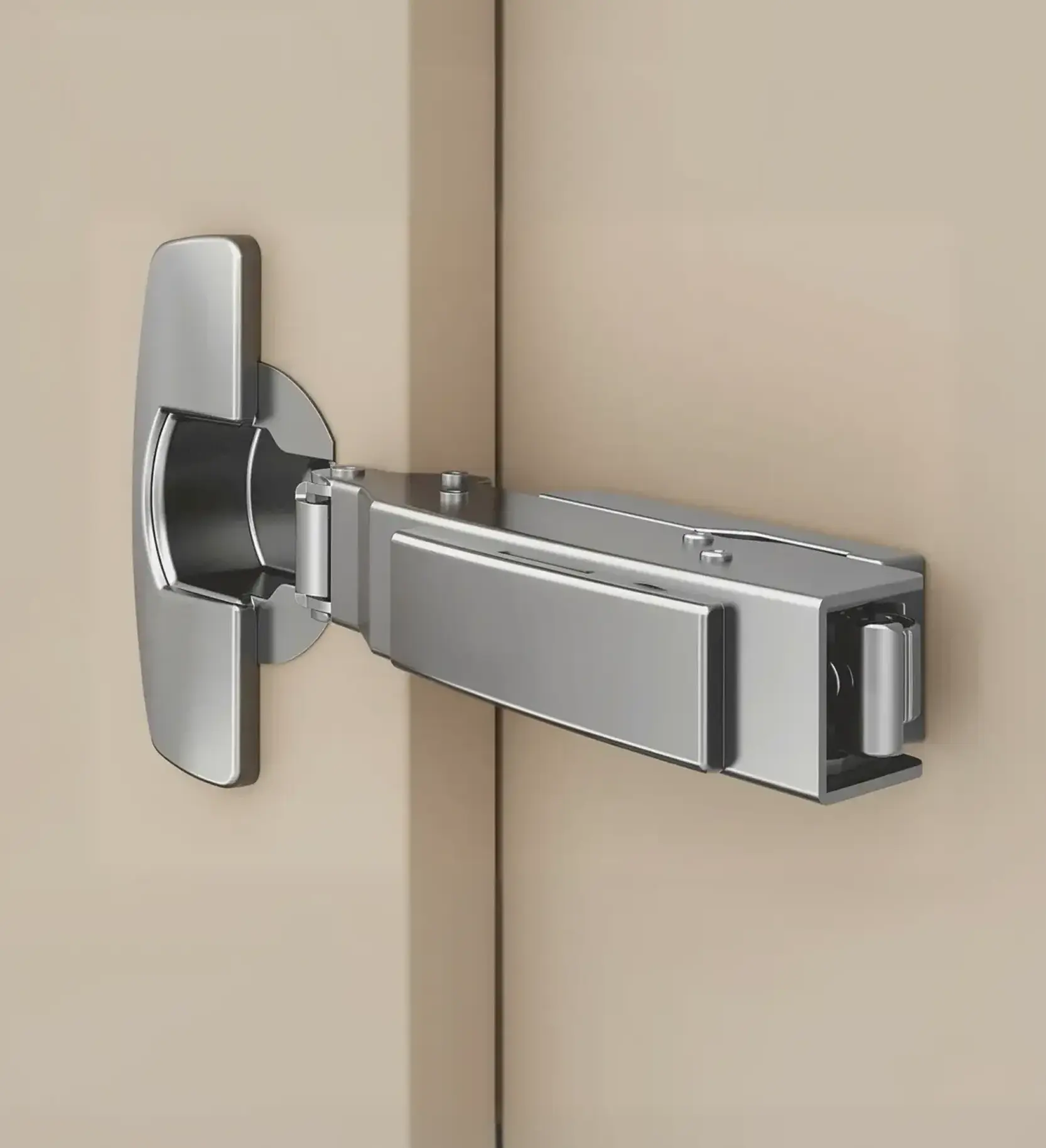
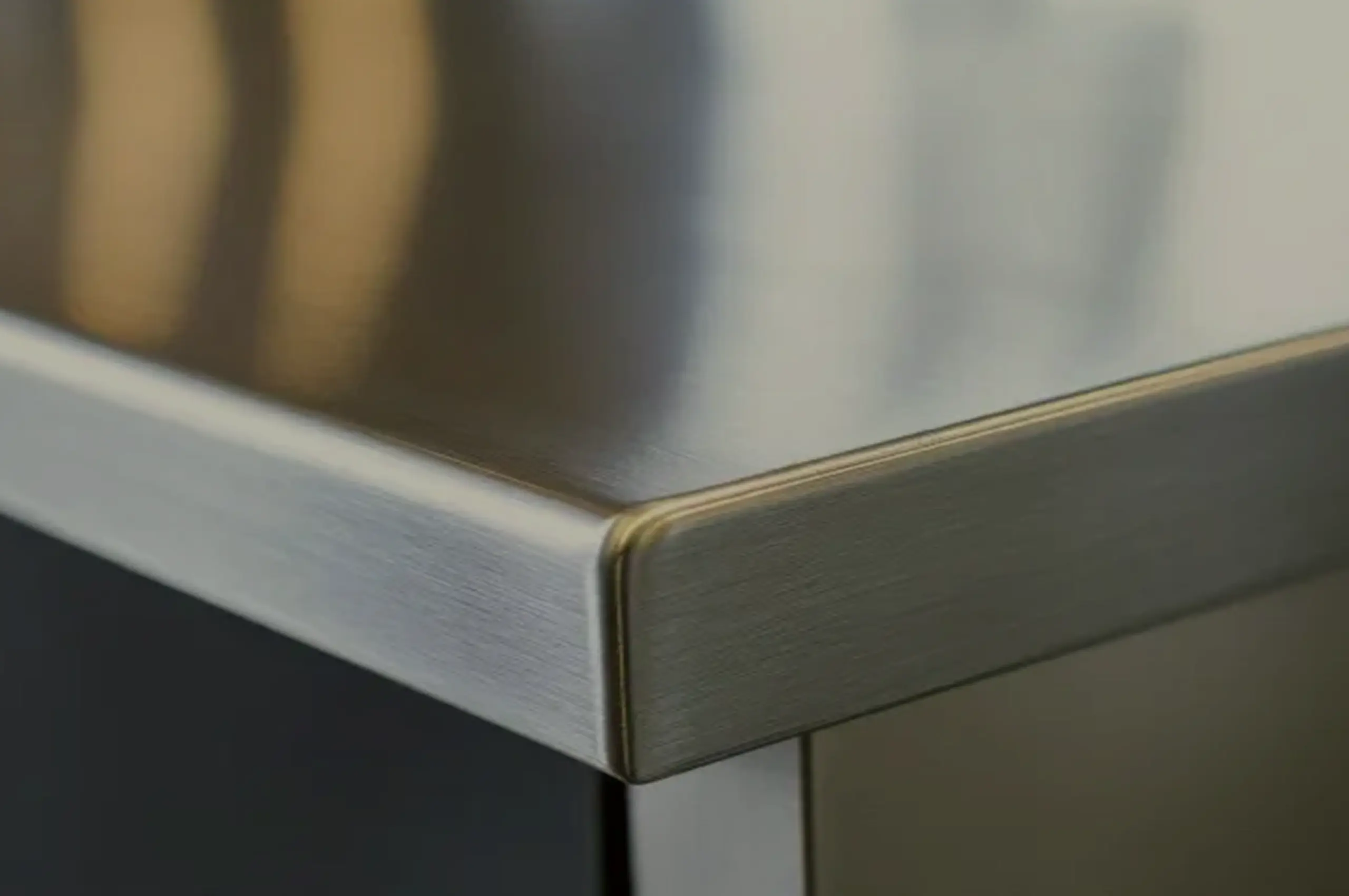
Steel Furniture provides a strong foundation for heavily loaded shelves, hanging rails, and repeated shutter use. Steelax’s rubber-insulated, dual-sheet panels help wardrobes operate quietly, while insert-nut fastening and double riveting support long-term stability. Matte, glossy, metallic, and textured finishes allow the exterior to coordinate with Best Modular Interiors.
To prepare your design brief, photograph each clothing category, estimate its share, identify daily reach zones, and note special items. Then ask the designer to label every internal section on the elevation. The most useful Steel Interiors in Lucknow will not simply look symmetrical. They will make getting dressed easier because every garment already has a logical place.