Table of Contents
- Why Manufacturing Determines Kitchen Quality
- The Difference Between In-House and Outsourced Manufacturing
- Better Quality Begins with Better Control
- Precision Through Advanced Machinery
- Consistency Across Every Component
- Faster Problem Solving and Better Customization
- Quality That Extends Beyond Installation
- Why Manufacturing Should Influence Your Buying Decision
Why Manufacturing Determines Kitchen Quality
When homeowners evaluate a modular kitchen, they naturally focus on visible details. The finish looks premium, the shutters close smoothly, the storage appears well organized, and the overall design feels elegant. While these aspects certainly matter, they are only the final outcome of a much larger process.
The real quality of a kitchen is determined long before it reaches the customer’s home.
Every cabinet, panel, drawer, and shutter passes through multiple stages of manufacturing before installation begins. If those stages lack precision or consistency, even the most attractive kitchen may begin showing problems after a few years of use.
This is why the manufacturing process deserves as much attention as the design itself.
The Difference Between In-House and Outsourced Manufacturing
Not every modular kitchen company manufactures its own products.
Many brands operate primarily as design and sales companies. They outsource production to third-party factories, often relying on multiple vendors for different components such as cabinet panels, painted shutters, hardware integration, or accessories.
While outsourcing is common across many industries, it also introduces variables that are difficult to control. Differences in production standards, material quality, finishing techniques, and quality inspections can create inconsistencies within the same project.
In-house manufacturing works differently.
The entire production process remains under one roof, allowing the manufacturer to supervise every stage, from raw material selection to final inspection. This creates greater accountability because the company controls not only the design but also the execution.
Better Quality Begins with Better Control
Quality is rarely achieved through inspection alone. It is built into the process.
When manufacturing is handled internally, every stage follows predefined quality standards. Raw materials can be inspected before production begins. Components can be measured repeatedly during fabrication. Surface finishes can be evaluated before assembly rather than after installation.
This continuous monitoring significantly reduces the likelihood of defects reaching the customer.
It also allows manufacturers to maintain tighter tolerances, ensuring that cabinets align correctly, drawers operate smoothly, and shutters maintain consistent gaps throughout the kitchen.
The result is a product that feels refined not because individual components are exceptional, but because every component performs consistently.
Precision Through Advanced Machinery
Modern modular kitchens rely on far more than skilled craftsmanship alone.
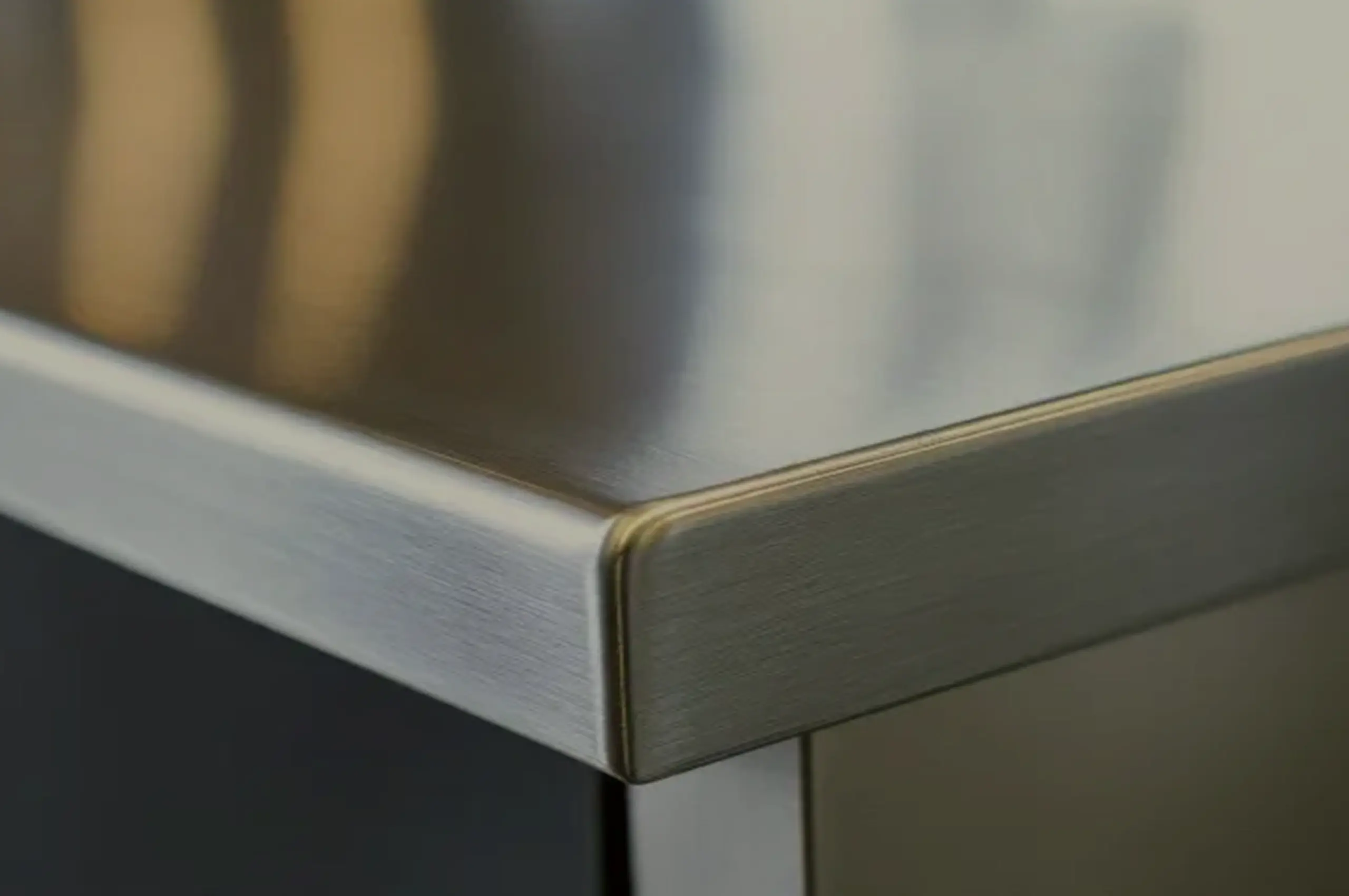
Advanced manufacturing equipment such as CNC cutting machines enables manufacturers to produce cabinet components with remarkable precision. Every panel is cut according to digital specifications, ensuring that repeated components remain virtually identical.
This level of accuracy becomes particularly important in stainless steel kitchens, where even small dimensional variations can affect assembly and appearance.
At Steelax, CNC-cut stainless steel forms the foundation of the manufacturing process, allowing cabinets to achieve cleaner joints, improved alignment, and greater structural consistency. Combined with engineered panel construction, this precision contributes directly to the overall quality of the finished kitchen.
Precision is not simply about aesthetics. It improves durability, functionality, and ease of installation.
Consistency Across Every Component
One of the greatest advantages of in-house manufacturing is consistency.
Imagine replacing a cabinet door several months after installation. If production standards vary between batches, the replacement may differ slightly in colour, finish, or dimensions.
Manufacturers that control their own production are far better positioned to maintain uniformity across every cabinet and every project.
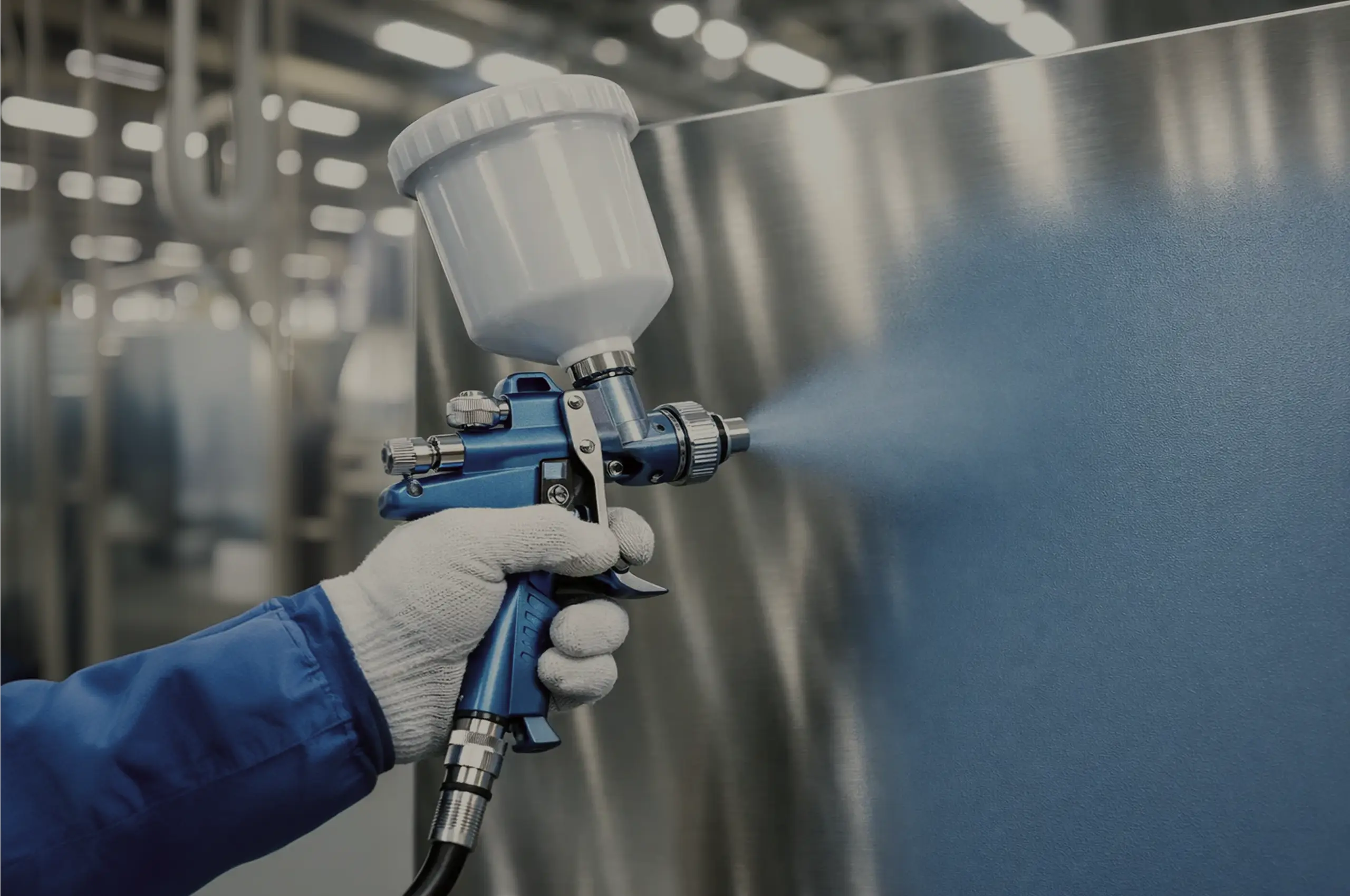
This consistency becomes especially valuable in surface finishing. Paint quality, colour matching, texture, and coating thickness all influence the final appearance of a kitchen.
Steelax’s in-house painting facility allows it to control finish quality rather than depending on external vendors. This ensures greater colour consistency while maintaining higher standards of surface durability across glossy, matte, textured, and metallic finishes.
For homeowners, these details may seem subtle initially, but they contribute significantly to the premium look and feel of the completed kitchen.
Faster Problem Solving and Better Customization
Every home is different.
Some kitchens require unusual dimensions, customized storage solutions, or design adjustments during production. When manufacturing is outsourced, accommodating these requests often involves additional coordination between multiple parties, increasing both time and complexity.
In-house manufacturing simplifies this process.
Designers, production teams, and quality inspectors work more closely together, allowing modifications to be implemented with greater efficiency. Communication becomes faster, and potential issues can often be resolved before they affect the project timeline.
This integrated workflow is particularly valuable for highly customized modular kitchens, where precision and flexibility must work together.
Quality That Extends Beyond Installation
The quality of a kitchen should not be judged only on installation day.
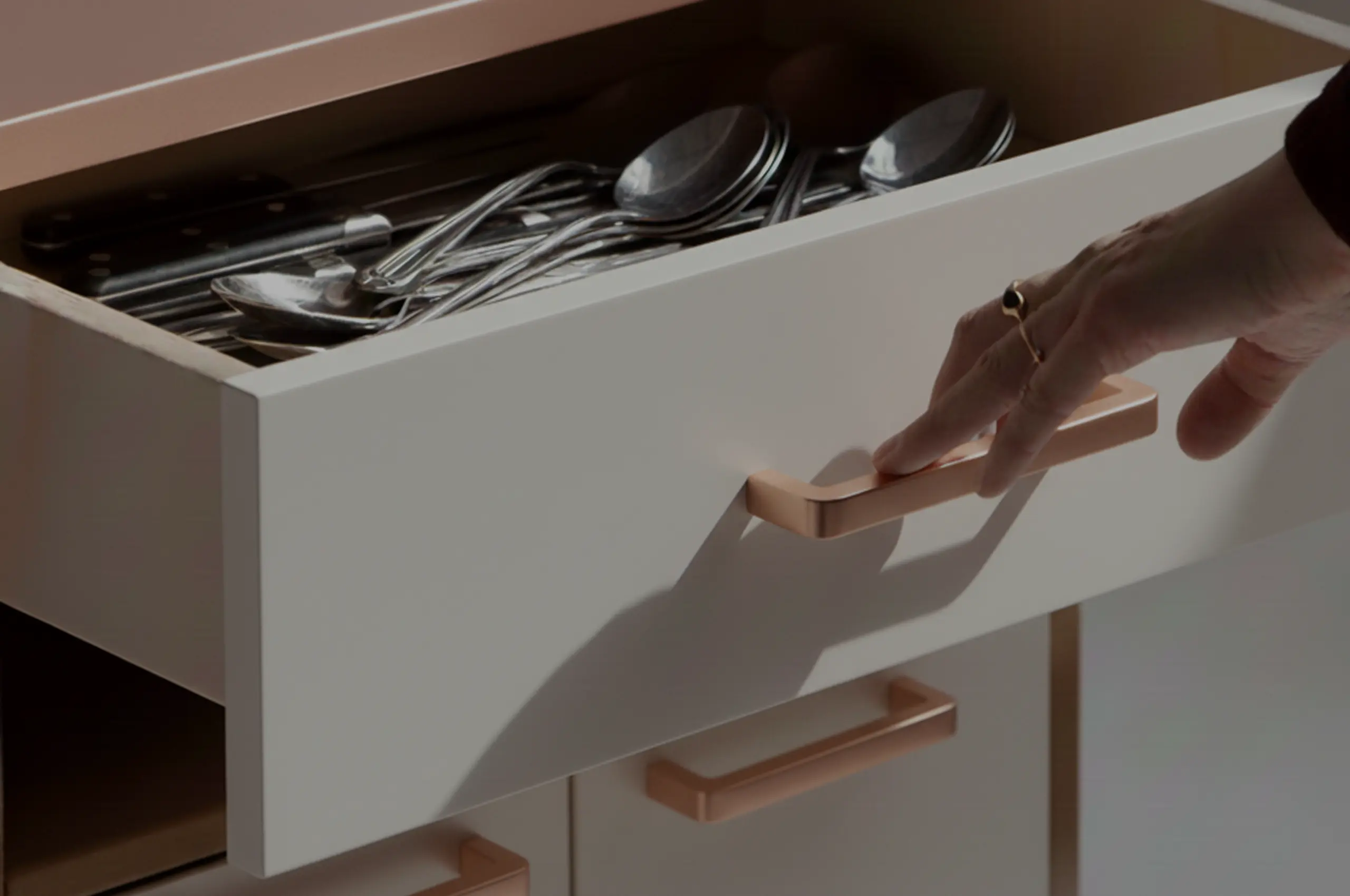
A truly well-manufactured kitchen continues to perform smoothly years later. Shutters remain aligned, drawers glide effortlessly, finishes retain their appearance, and structural components remain stable despite years of everyday use.
This long-term reliability depends heavily on the manufacturing standards followed at the very beginning of the process.
A kitchen built with careful engineering, quality-controlled production, and rigorous inspection is naturally better equipped to withstand daily wear than one assembled with inconsistent manufacturing practices.
The difference may not be obvious immediately, but it becomes increasingly evident with time.
Why Manufacturing Should Influence Your Buying Decision
Homeowners often compare modular kitchens based on appearance, layout, or price. While these are important considerations, they reveal very little about how the kitchen has actually been built.
Understanding a manufacturer’s production capabilities provides valuable insight into the quality of the finished product. Companies that invest in advanced machinery, in-house finishing, quality control, and engineering-led manufacturing are generally better positioned to deliver consistent results.
For homeowners searching for the Best Modular Kitchens in Lucknow, asking how a kitchen is manufactured can be just as important as asking how it looks. Brands like Steelax Lucknow demonstrate how in-house manufacturing creates greater precision, stronger quality control, better customization, and long-term durability. Ultimately, a premium kitchen is not defined only by its design but by the process that brings it to life.