Table of Contents
- Why Preparation Is More Important Than Construction
- Define Your Goals Before Your Budget
- Evaluate What Can Be Retained
- Finalize the Design Before Work Begins
- Plan Utilities and Appliances Early
- Set a Realistic Budget and Timeline
- Choose the Right Renovation Partner
- Begin the Project with Confidence
Why Preparation Is More Important Than Construction
Most renovation delays don’t happen because of installation challenges. They happen because important decisions were left until construction had already begun.
A homeowner changes the layout after production starts. An appliance doesn’t fit because its dimensions weren’t confirmed. Electrical points need to be shifted after cabinets arrive. These situations not only delay the project but also increase costs and create unnecessary frustration.
Good renovations begin with careful preparation. When the planning is thorough, the execution becomes smoother, faster, and far more predictable.
Think of the renovation process like building a roadmap. The clearer the route, the fewer unexpected detours you’ll encounter.
Define Your Goals Before Your Budget
Before discussing layouts, finishes, or quotations, take a step back and ask a simple question.
What do you want this renovation to achieve?
Some homeowners want more storage. Others want a kitchen that’s easier to maintain. Some are focused on creating a premium look, while others are replacing worn-out interiors that no longer function efficiently.
Having clear priorities helps every future decision become easier.
For example, if durability is your biggest concern, material selection becomes more important than decorative upgrades. If entertaining guests is a priority, larger preparation areas and better workflow may deserve greater attention.
A renovation should solve problems, not simply replace old furniture with new furniture.
Evaluate What Can Be Retained
Not everything needs to be demolished.
One of the smartest ways to control renovation costs is by identifying elements that are still in good condition. Existing plumbing lines, electrical points, flooring, countertops, or even portions of the cabinetry may be suitable for reuse depending on the condition of the space.
On the other hand, components that have already suffered moisture damage, structural deterioration, or repeated repairs are often worth replacing rather than trying to restore.
A professional site inspection can help distinguish between upgrades that add value and replacements that are genuinely necessary.
Making this assessment early prevents unnecessary spending later.

Finalize the Design Before Work Begins
This is perhaps the most important step in the entire renovation process.
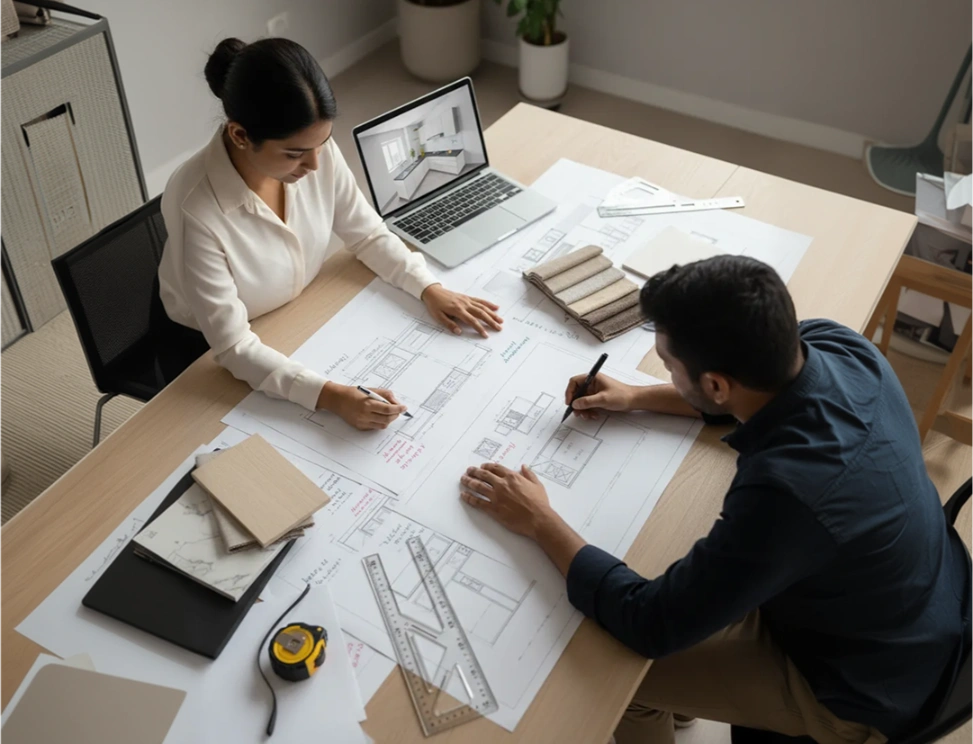
Every aspect of the design should be approved before manufacturing or construction begins. Cabinet layouts, storage planning, appliance locations, countertop materials, finishes, lighting positions, and hardware selections should all be confirmed in advance.
Many homeowners continue making changes after production has started, believing they are only requesting small adjustments. In reality, even minor revisions can affect manufacturing, installation schedules, and project costs.
Spending a little more time reviewing the design beforehand often saves weeks of delays later.
The more complete the planning, the smoother the execution.
Plan Utilities and Appliances Early
A modern kitchen is built around much more than cabinets.
Water purifiers, chimneys, ovens, microwaves, refrigerators, dishwashers, washing machines, and lighting systems all require dedicated electrical and plumbing provisions. These services should be coordinated with the kitchen layout rather than treated as separate decisions.
It is equally important to finalize appliance dimensions before manufacturing begins. Even slight differences in size can affect cabinet widths, ventilation clearances, and installation details.
When utilities and appliances are planned together with the furniture, the finished kitchen feels integrated rather than assembled in stages.
Set a Realistic Budget and Timeline
Every renovation involves decisions that influence both cost and completion time.
Rather than planning only for the quoted amount, homeowners should also keep a small contingency for unforeseen requirements. Unexpected structural repairs, utility adjustments, or design refinements occasionally arise even in well-planned projects.
It is equally important to understand the expected timeline.
Factory-manufactured modular interiors generally require time for design approval, production, finishing, quality inspection, and installation. Knowing this schedule in advance helps homeowners prepare their routines accordingly instead of expecting immediate completion.
A realistic plan reduces unnecessary pressure on both the homeowner and the project team.
Choose the Right Renovation Partner
The quality of a renovation depends not only on the design but also on the team delivering it.
Before making a decision, ask questions that go beyond price.
Does the company manufacture its own products or outsource production? What materials do they use? How is quality controlled? Who manages installation? What warranty and after-sales support are offered?
Companies that handle design, manufacturing, finishing, and installation under one system often provide greater consistency because every stage is coordinated internally.
For example, Steelax combines in-house manufacturing, precision CNC fabrication, engineered steel construction, and in-house finishing to maintain quality across the entire project rather than relying on multiple external vendors.
Understanding the process behind the product is often just as important as evaluating the product itself.
Begin the Project with Confidence
A successful renovation is rarely the result of last-minute decisions. It is the outcome of careful planning, realistic expectations, and informed choices made before the work even begins.
By defining your priorities, finalizing designs early, coordinating utilities, selecting durable materials, and partnering with an experienced manufacturer, you create the foundation for a smoother renovation experience.
For homeowners planning the Best Modular Kitchens in Lucknow or upgrading other areas of their home, preparation is the single biggest factor that determines project success. Brands like Steelax Lucknow demonstrate how thoughtful planning, engineering-led design, and professional execution can turn what often feels like a stressful process into an organized and rewarding home transformation.