Table of Contents
- Every Great Kitchen Begins Before Construction
- The Design and Planning Stage
- Finalizing Materials and Specifications
- Manufacturing the Kitchen
- Preparing Your Home for Installation
- Installation Day and What Follows
- Final Checks Before Handover
- A Renovation That Adds Value for Years
Every Great Kitchen Begins Before Construction
Many homeowners imagine that a kitchen renovation starts when the old cabinets are removed. In reality, the project begins much earlier, with planning, measurements, and countless design decisions that determine how successful the final kitchen will be.
A well-executed renovation is not just about replacing old cabinets with new ones. It is an opportunity to rethink how the kitchen functions, improve storage, enhance workflow, and create a space that suits your lifestyle for years to come.
Understanding what happens at each stage of the renovation helps set realistic expectations and makes the entire experience far less stressful.
The Design and Planning Stage
The first stage focuses on understanding your requirements rather than discussing colors or finishes.
A designer will usually begin by studying how your family uses the kitchen. Do you cook elaborate meals every day? Do you need additional pantry storage? Are multiple people likely to use the kitchen simultaneously? These questions influence everything from the layout to cabinet placement.
Once the functional requirements are clear, detailed site measurements are taken. Every wall, window, plumbing point, electrical outlet, and structural element is carefully documented to ensure the design fits perfectly within the available space.
The design is then developed into a complete layout, allowing homeowners to visualize the kitchen before manufacturing begins. This stage is also the best opportunity to make changes, as modifications become far more difficult once production starts.
Finalizing Materials and Specifications
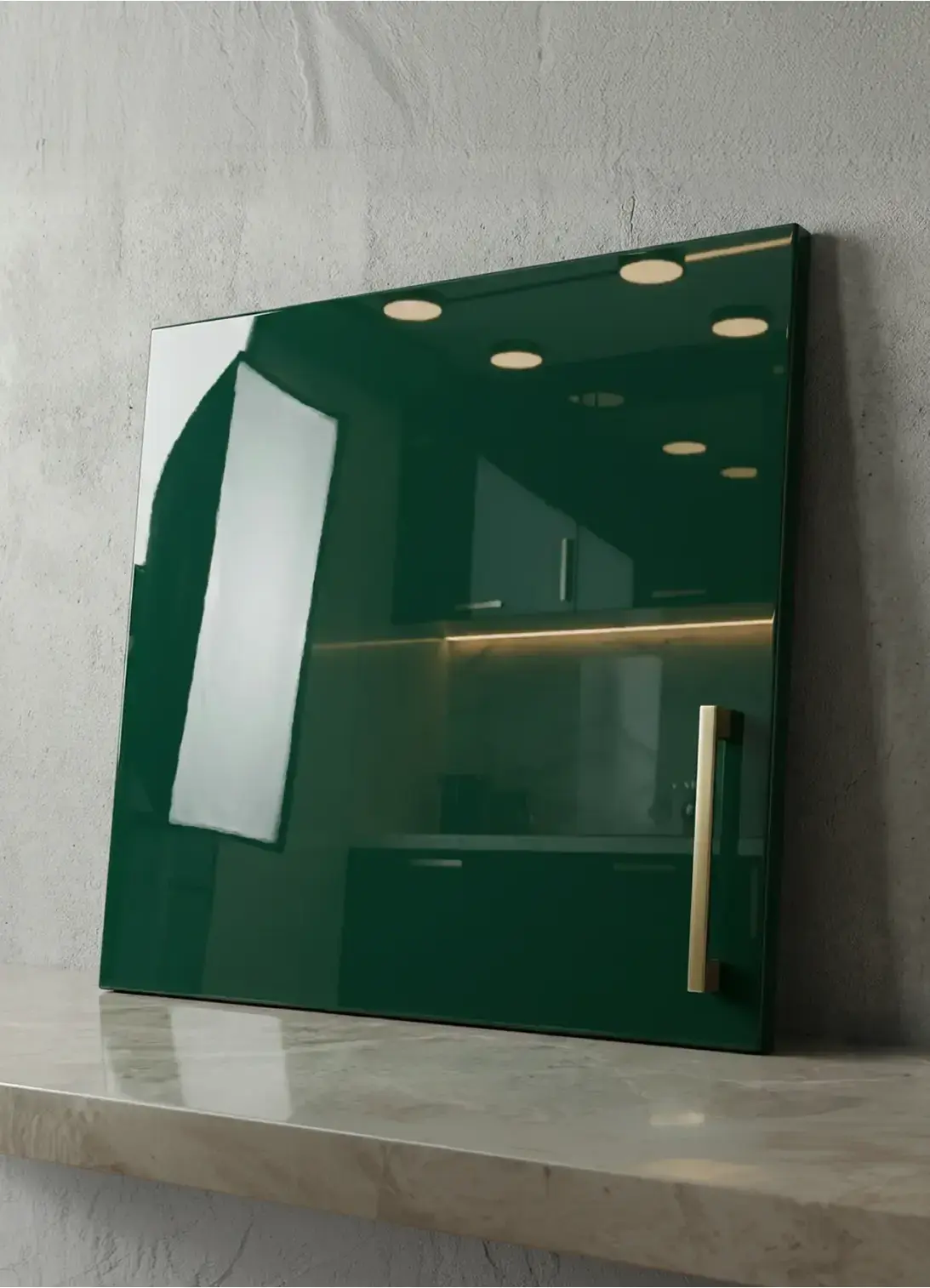
After the layout is approved, attention shifts to selecting the materials and finishes that will define both the appearance and performance of the kitchen.
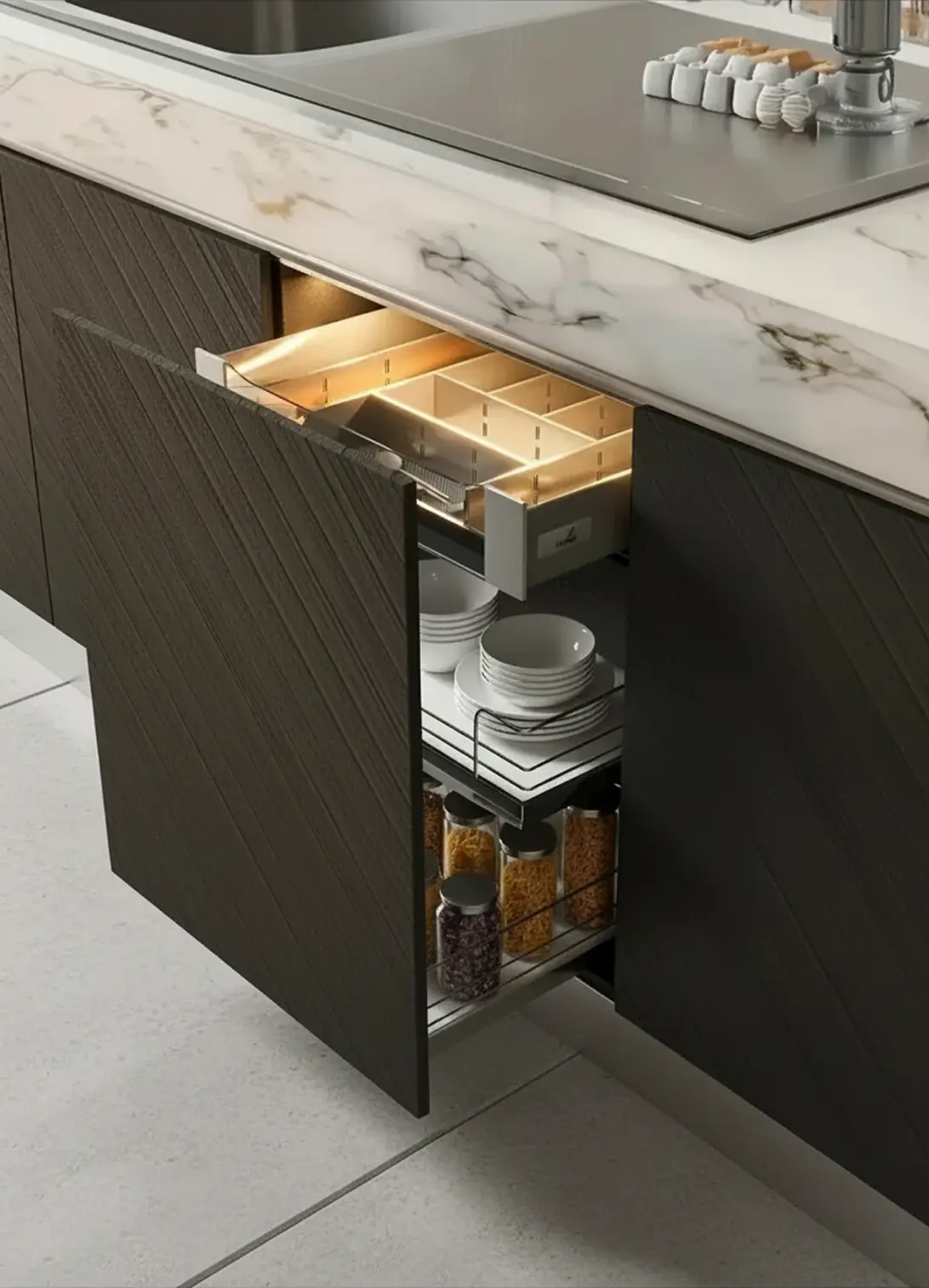
This includes choosing cabinet finishes, countertops, hardware, storage accessories, handles, and internal configurations. It is also the stage where homeowners decide on the structural material of the kitchen.
Rather than focusing only on aesthetics, experienced designers encourage homeowners to think about long-term durability. Kitchens are exposed to moisture, heat, oil, and constant daily use, making material selection one of the most important decisions in the entire project.
This is also when appliance locations, lighting provisions, and service points are finalized so that manufacturing can proceed without uncertainty.
Manufacturing the Kitchen
Unlike traditional kitchens that are built almost entirely on-site, modular kitchens are manufactured in controlled factory environments.
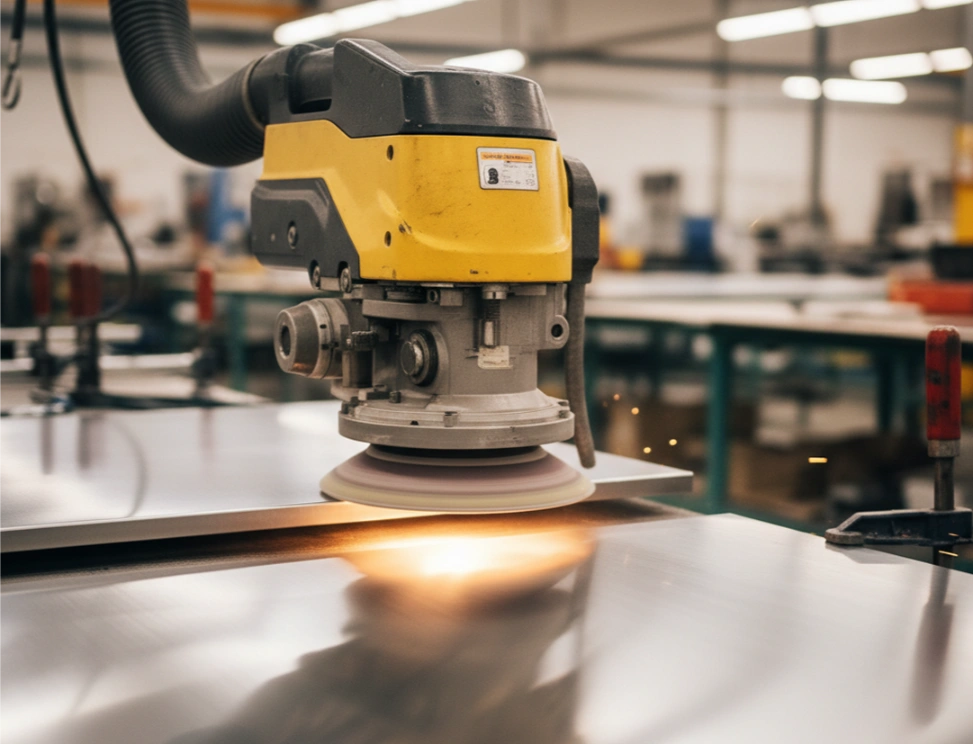
Every cabinet is produced according to the approved design using precision machinery. Components are cut, fabricated, finished, and assembled before they ever reach your home.
Factory manufacturing offers several advantages. It improves dimensional accuracy, maintains consistent finish quality, reduces material wastage, and minimizes the disruption typically associated with on-site construction.
For stainless steel modular kitchens, this stage involves precision fabrication using CNC technology, engineered panel construction, and quality-controlled finishing processes that ensure every module meets the required standards before dispatch. The result is a kitchen that arrives ready for installation rather than being built piece by piece inside your home.
Preparing Your Home for Installation
While the kitchen is being manufactured, your home also needs preparation.
Existing cabinets are removed, and the space is cleared for installation. Plumbing and electrical connections are checked to ensure they align with the approved design. Flooring, wall finishes, and ceiling work are typically completed before the new kitchen arrives.
This stage often creates the most visible disruption, but it is temporary. Proper planning helps minimize delays and ensures that installation can begin immediately once the modules are delivered.
Many homeowners also use this time to finalize appliances so they can be integrated seamlessly into the new kitchen.
Installation Day and What Follows
Installation is often much quicker than homeowners expect.
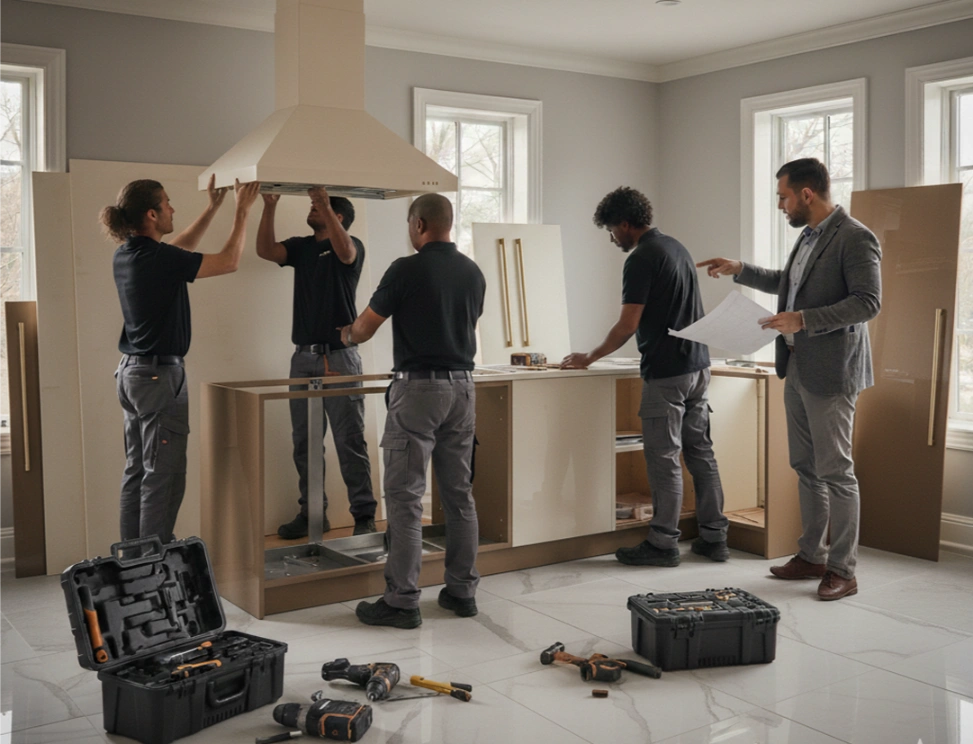
Because modular kitchens are factory manufactured, the installation team primarily focuses on assembling the prepared modules, aligning cabinets, fitting countertops, integrating appliances, and making final adjustments.
Each cabinet is carefully positioned according to the approved layout. Drawers, shutters, hardware, and accessories are checked for smooth operation before the team moves on to the next stage.
Unlike traditional carpentry, there is very little cutting or fabrication required on-site. This results in a cleaner work environment, reduced noise, and significantly shorter installation timelines.
As the final details come together, homeowners begin to see months of planning transformed into a fully functional kitchen.
Final Checks Before Handover
A professional kitchen installation does not end when the last cabinet is fixed.
Before handover, the installation team conducts a detailed inspection of the entire kitchen. Cabinet alignment, drawer movement, shutter gaps, hardware operation, countertop installation, and finish quality are all carefully checked.
Any minor adjustments are completed before the project is officially handed over.
This is also the ideal time for homeowners to understand how various storage systems, accessories, and hardware mechanisms operate. Proper guidance during handover helps ensure that the kitchen continues performing smoothly for years.
A successful project is measured not only by how the kitchen looks but also by how confidently the homeowner can begin using it from day one.
A Renovation That Adds Value for Years
A kitchen renovation is one of the most rewarding improvements a homeowner can make. Beyond transforming the appearance of the home, it enhances functionality, improves organization, and creates a space that supports everyday living more efficiently.
The process may involve several stages, but each one plays an important role in delivering a durable, well-planned, and beautifully finished result. When homeowners understand what to expect, they can make better decisions and approach the renovation with confidence instead of uncertainty.
For those searching for the Best Modular Kitchens in Lucknow, choosing an experienced manufacturer is just as important as selecting the right design. Companies like Steelax Lucknow combine thoughtful planning, precision manufacturing, premium materials, and professional installation to ensure that every renovation delivers lasting value long after the project is complete.