Table of Contents
- Why Manufacturing Matters
- Design and Technical Planning
- Precision Cutting with CNC Technology
- Fabrication and Structural Assembly
- Surface Finishing and Quality Control
- Hardware Integration and Pre-Assembly
- Packaging, Delivery, and Installation
- Why Factory Manufacturing Delivers Better Results
Why Manufacturing Matters
When homeowners walk into a beautifully finished modular kitchen, they usually notice the colours, countertops, lighting, and elegant finishes. What often goes unnoticed is the manufacturing process that determines how that kitchen will perform for the next twenty or thirty years.
Unlike traditional carpenter-built kitchens that are constructed almost entirely on-site, modular kitchens are engineered and manufactured in controlled factory environments. This shift from craftsmanship alone to precision engineering has transformed the quality, consistency, and durability of modern kitchens.
For stainless steel modular kitchens, manufacturing becomes even more critical. Working with steel demands greater accuracy, specialized machinery, and stringent quality standards. Every stage contributes to creating a kitchen that is not only visually refined but also structurally dependable.

Design and Technical Planning
Every kitchen begins long before the first sheet of steel enters the factory.
Once the homeowner’s requirements are understood, designers prepare detailed layouts that define cabinet dimensions, storage configurations, appliance locations, plumbing provisions, and electrical points. Every measurement is carefully verified because even minor inaccuracies can affect installation later.
These approved designs are then converted into technical production drawings. Unlike conventional site-built kitchens where adjustments are often made during construction, factory manufacturing relies on precise planning from the outset.
This stage ensures that every cabinet, shutter, drawer, and structural component fits together perfectly during installation.
Precision Cutting with CNC Technology
After the design is finalized, manufacturing begins with precision cutting.
Large sheets of stainless steel are processed using CNC (Computer Numerical Control) machines that cut every component according to exact digital specifications. Unlike manual fabrication, CNC technology ensures remarkable consistency across every piece.
Accurate cutting offers several advantages. Cabinet dimensions remain uniform, edges are cleaner, and joints align precisely during assembly. This level of accuracy also minimizes material wastage while improving production efficiency.
For homeowners, this precision translates into tighter shutter gaps, smoother cabinet alignment, and a cleaner finished appearance throughout the kitchen.
Fabrication and Structural Assembly
Once individual components have been cut, they move to the fabrication stage.
Here, panels are bent, formed, reinforced, and assembled into cabinet structures. Unlike simple sheet metal boxes, premium stainless steel kitchens involve carefully engineered panel systems that provide strength while maintaining a refined appearance.
Steelax, for example, uses a dual-sheet construction with a rubber-insulated core to create an 18 mm thick panel that feels solid during everyday use while eliminating the metallic sound often associated with traditional steel furniture. The panels are further strengthened using double riveting and an insert nut mechanism that securely anchors screws, improving long-term structural stability and preventing shutter sagging.
These engineering details remain invisible once the kitchen is installed, yet they have a significant impact on durability and user experience.
Surface Finishing and Quality Control
The structural cabinet is only one part of the final product. Equally important is the finish that gives the kitchen its visual character.
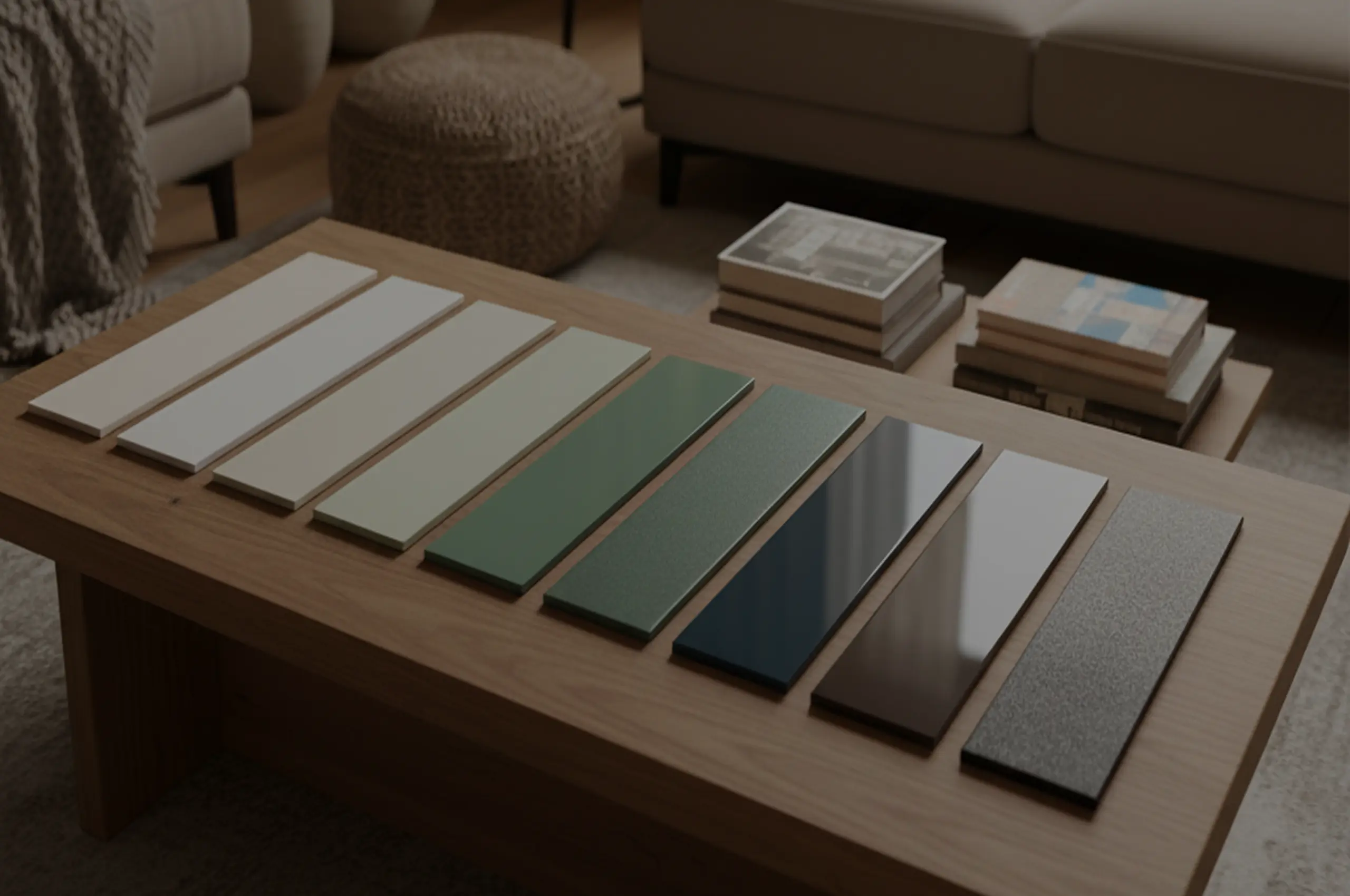
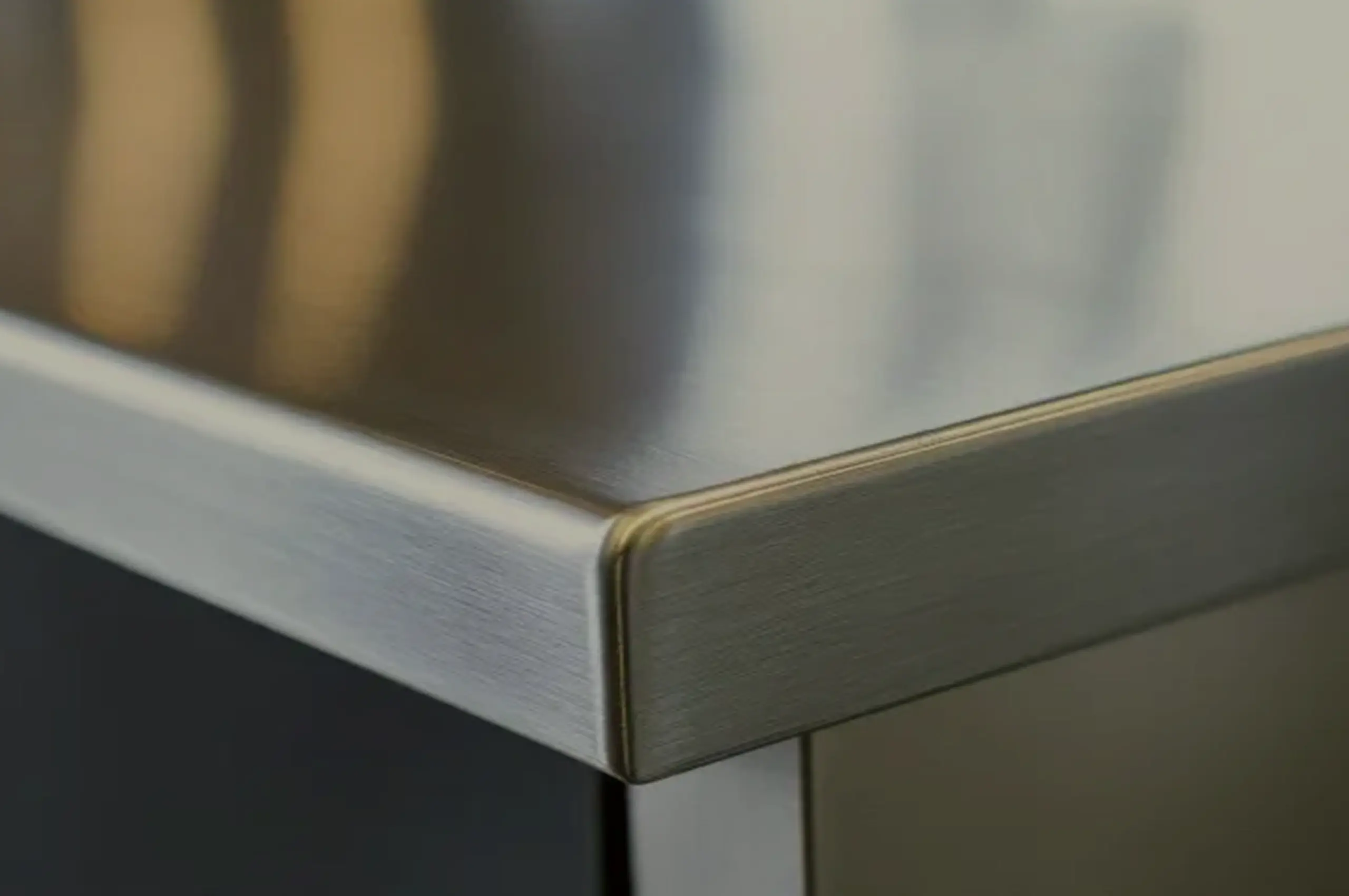
After fabrication, components undergo surface preparation before receiving their selected finish. Depending on the design, this may include glossy PU coatings, matte finishes, textured surfaces, metallic finishes, or wood-inspired aesthetics.
Manufacturers with in-house finishing facilities maintain greater control over colour consistency, paint adhesion, and overall surface quality. This reduces variation between components and helps achieve a more uniform appearance throughout the kitchen.
Every finished component is inspected before moving to the next stage. Surface imperfections, dimensional accuracy, and finish quality are all checked to ensure only approved components proceed to assembly.
Hardware Integration and Pre-Assembly
Before leaving the factory, cabinets are prepared for hardware installation.
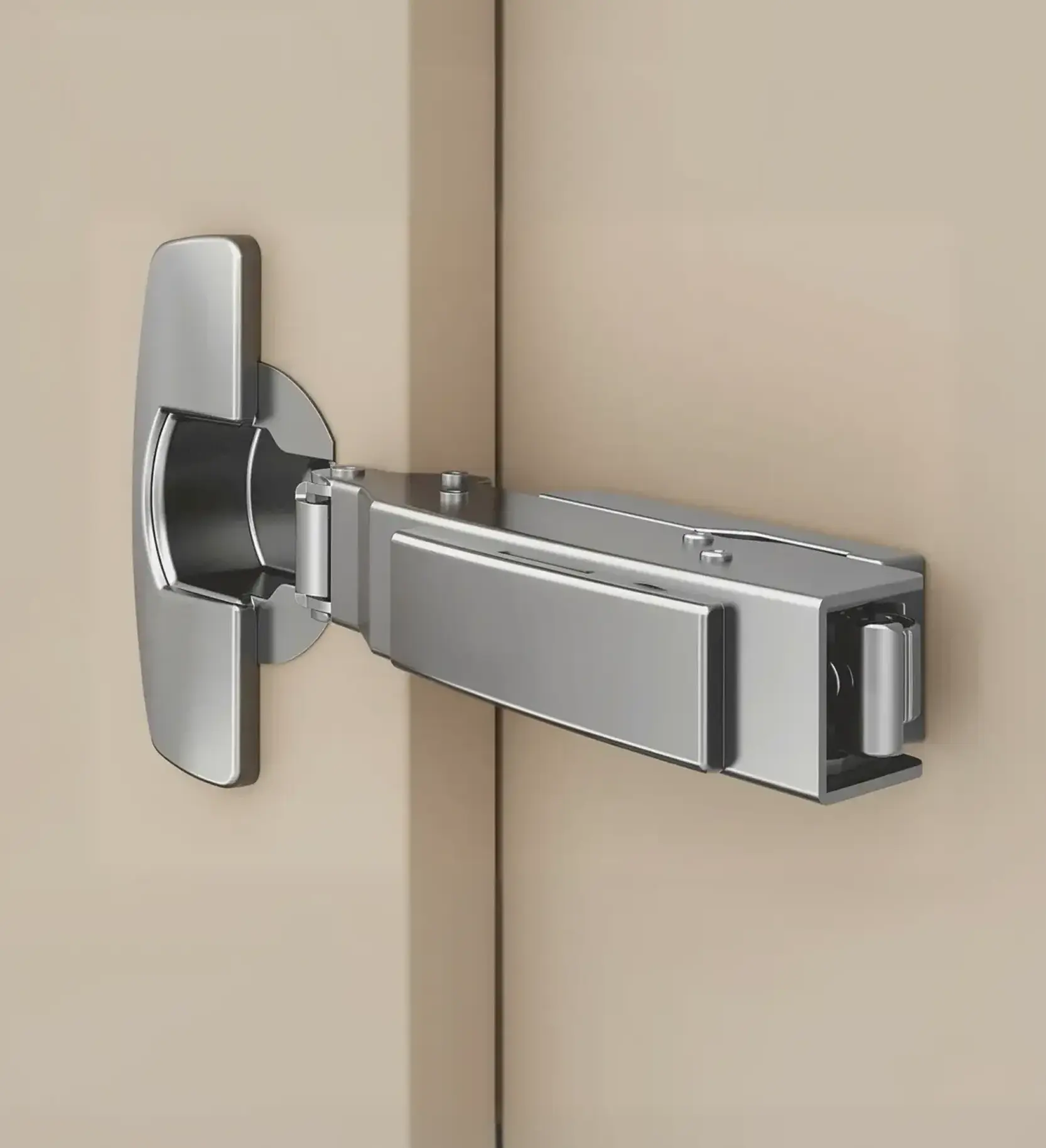
Drawer systems, hinges, pull-out mechanisms, lift-up fittings, and storage accessories are carefully integrated into the modules. This stage requires high precision because hardware directly influences how the kitchen feels in everyday use.
Soft-close hinges, premium drawer channels, and specialized storage systems are tested to ensure smooth operation before dispatch.
Pre-assembly also allows technicians to verify cabinet alignment and identify any adjustments required before installation at the customer’s home.
By resolving these issues in the factory rather than on-site, manufacturers significantly reduce installation time and improve overall quality.
Packaging, Delivery, and Installation
Once manufacturing is complete, every module is carefully packaged for transportation.
Since modular kitchens are produced as individual units, each cabinet arrives ready for assembly. Protective packaging helps prevent damage during transit, preserving the finish and structural integrity of every component.
At the project site, installation teams position the cabinets according to the approved layout, align shutters, fit countertops, integrate appliances, and complete all finishing adjustments.
Because the manufacturing work has already been completed in the factory, on-site activity focuses primarily on assembly and calibration rather than fabrication.
This results in a faster, cleaner installation process with minimal disruption inside the home.
Why Factory Manufacturing Delivers Better Results
Factory manufacturing has fundamentally changed the way premium kitchens are built.
Controlled production environments allow manufacturers to maintain higher levels of precision, consistency, and quality than traditional site-based construction. Every stage, from CNC cutting to finishing and hardware integration, follows standardized processes that reduce errors and improve reliability.
For homeowners, this means better-fitting cabinets, smoother operation, superior finishes, and a kitchen that continues to perform reliably for years.
For those searching for the Best Modular Kitchens in Lucknow, understanding the manufacturing process offers valuable insight into what separates premium modular systems from conventional alternatives. Brands like Steelax Lucknow combine advanced manufacturing technologies, engineered steel construction, in-house finishing, and precision assembly to create kitchens that are not only visually elegant but also built for exceptional long-term performance.